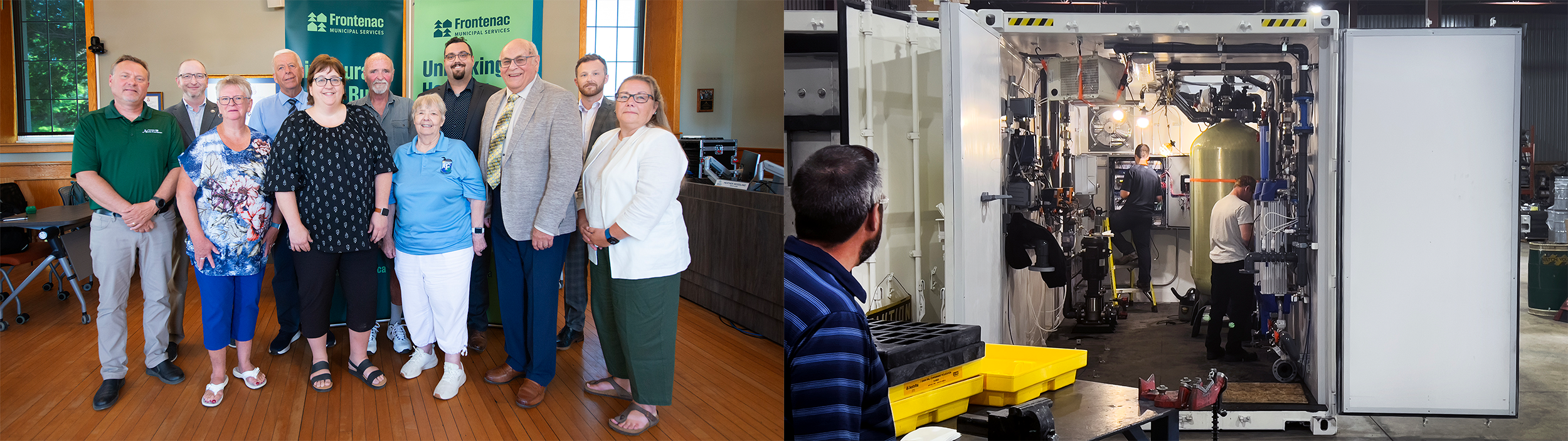
2022-2026 Frontenac County Council Term in Review

What County Council does

Frontenac County Council's work reaches into daily life across our communities - from emergency medical care and long-term care to transportation, trails, planning, infrastructure, and support for local businesses and communities. During the 2022-2026 term, Council invested in these services, worked with partners to address shared challenges, and prepared for needs that will extend beyond a single Council term.

The work continues, and residents play the most important role in what comes next.

Progress during the 2022-2026 term

  • Councillors and staff worked with municipalities, governments, organizations, and residents to advocate matters related to healthcare, emergency preparedness, housing, transportation, connectivity,and other shared priorities.
  • Council added $1 million in new annual Paramedic staffing and invested $3.7 million in bases, vehicles, equipment.
  • Council began planning for the long-term redevelopment of Fairmount Home while Fairmount residents and families reported 98 per cent satisfaction in 2025 - the highest result in a decade.
  • Council and staff advanced communal servicing as a new, right-sized option for development in our villages and hamlets.
  • Council invested millions in the Frontenac K&P Trail, administrative facilities, and other public bricks-and-mortar assets.
  • Council progressively increased the annual amount directed to capital reserves to help prepare for future repair and replacement costs.

Where your County tax dollar goes

Annual budget processes require Councillors to balance the services residents need today with the cost of maintaining and replacing the assets those services will need tomorrow. County taxes support services and infrastructure that are delivered or coordinated at the County level, including Paramedics, long-term care, community planning, community transportation, healthcare, the Howe Island County Ferry, Frontenac K&P trail, economic development, emergency management, administration, shared services, and long-term capital needs.

Each residential property-tax dollar is divided among Frontenac County, the township in which you live, and provincial education taxes. The County and education residential tax rates are the same across Frontenac’s four townships. Each township established its own local residential tax rate to fund municipal services. As a result, the proportion of each property-tax dollar allocated to County, education, and township services differs by location. Frontenac County Council then allocates the county portion among the services it provides directly, and shared services it supports.
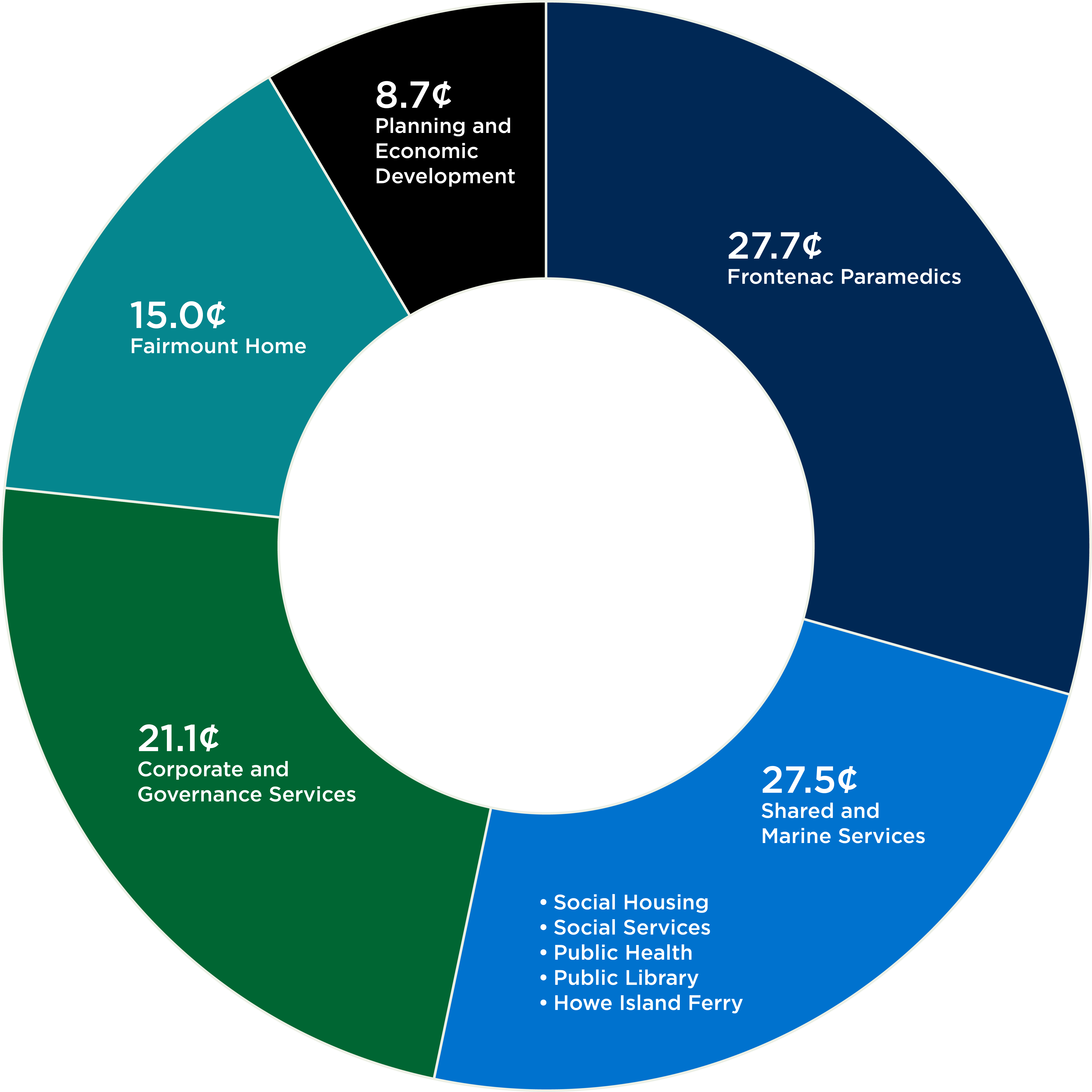
Each segment represents approximate 2026 projected allocation of each County property tax-dollar among five service areas. Values are based on net County levy requirements rather than total expenditures. Some categories are consolidated for presentation. Figures are rounded.

Explore the work

Have your say

Council works for the people and communities its members represent. Residents can follow projects, review information, participate in consultations, attend Council meetings, and contact their elected representatives. During the Council term, staff used EngageFrontenac.ca to connect with residents on 82 projects. People made approximately 160,800 visits to the site and submitted approximately 3,530 responses across 35 surveys.


Explore EngageFrontenac.ca to participate


What County Council does

Frontenac County Council's work reaches into daily life across our communities - from emergency medical care and long-term care to transportation, trails, planning, infrastructure, and support for local businesses and communities. During the 2022-2026 term, Council invested in these services, worked with partners to address shared challenges, and prepared for needs that will extend beyond a single Council term.

The work continues, and residents play the most important role in what comes next.

Progress during the 2022-2026 term

  • Councillors and staff worked with municipalities, governments, organizations, and residents to advocate matters related to healthcare, emergency preparedness, housing, transportation, connectivity,and other shared priorities.
  • Council added $1 million in new annual Paramedic staffing and invested $3.7 million in bases, vehicles, equipment.
  • Council began planning for the long-term redevelopment of Fairmount Home while Fairmount residents and families reported 98 per cent satisfaction in 2025 - the highest result in a decade.
  • Council and staff advanced communal servicing as a new, right-sized option for development in our villages and hamlets.
  • Council invested millions in the Frontenac K&P Trail, administrative facilities, and other public bricks-and-mortar assets.
  • Council progressively increased the annual amount directed to capital reserves to help prepare for future repair and replacement costs.

Where your County tax dollar goes

Annual budget processes require Councillors to balance the services residents need today with the cost of maintaining and replacing the assets those services will need tomorrow. County taxes support services and infrastructure that are delivered or coordinated at the County level, including Paramedics, long-term care, community planning, community transportation, healthcare, the Howe Island County Ferry, Frontenac K&P trail, economic development, emergency management, administration, shared services, and long-term capital needs.

Each residential property-tax dollar is divided among Frontenac County, the township in which you live, and provincial education taxes. The County and education residential tax rates are the same across Frontenac’s four townships. Each township established its own local residential tax rate to fund municipal services. As a result, the proportion of each property-tax dollar allocated to County, education, and township services differs by location. Frontenac County Council then allocates the county portion among the services it provides directly, and shared services it supports.

Each segment represents approximate 2026 projected allocation of each County property tax-dollar among five service areas. Values are based on net County levy requirements rather than total expenditures. Some categories are consolidated for presentation. Figures are rounded.

Explore the work

Have your say

Council works for the people and communities its members represent. Residents can follow projects, review information, participate in consultations, attend Council meetings, and contact their elected representatives. During the Council term, staff used EngageFrontenac.ca to connect with residents on 82 projects. People made approximately 160,800 visits to the site and submitted approximately 3,530 responses across 35 surveys.


Explore EngageFrontenac.ca to participate


  • Caring for friends and neighbours

    supporting image

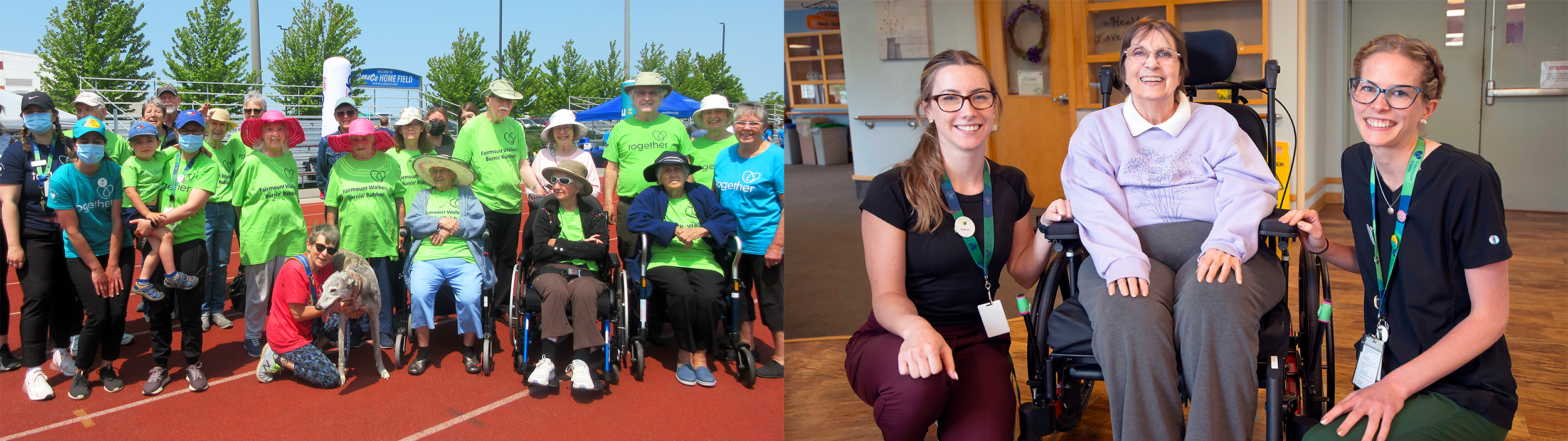
    How Council invested in Paramedics, Fairmount Home, care closer to home, primary care, and transportation for residents in need.

    Some of County Council's largest responsibilities are among the most personal: Ensuring paramedics are equipped to respond when someone calls 9-1-1, equipping staff to care for residents of Fairmount Home, helping people live longer in their own homes, and supporting access to public healthcare and transportation.

    Some services, such as social housing supports, are delivered through established shared-service arrangements with the City of Kingston.

    During the 2022-2026 term, Council invested in people, facilities, vehicles, equipment, and partnerships to strengthen those services

    How Council invested in Paramedics, Fairmount Home, care closer to home, primary care, and transportation for residents in need.

    Some of County Council's largest responsibilities are among the most personal: Ensuring paramedics are equipped to respond when someone calls 9-1-1, equipping staff to care for residents of Fairmount Home, helping people live longer in their own homes, and supporting access to public healthcare and transportation.

    Some services, such as social housing supports, are delivered through established shared-service arrangements with the City of Kingston.

    During the 2022-2026 term, Council invested in people, facilities, vehicles, equipment, and partnerships to strengthen those services, even as demand for services continued to rise.

    More Paramedic capacity

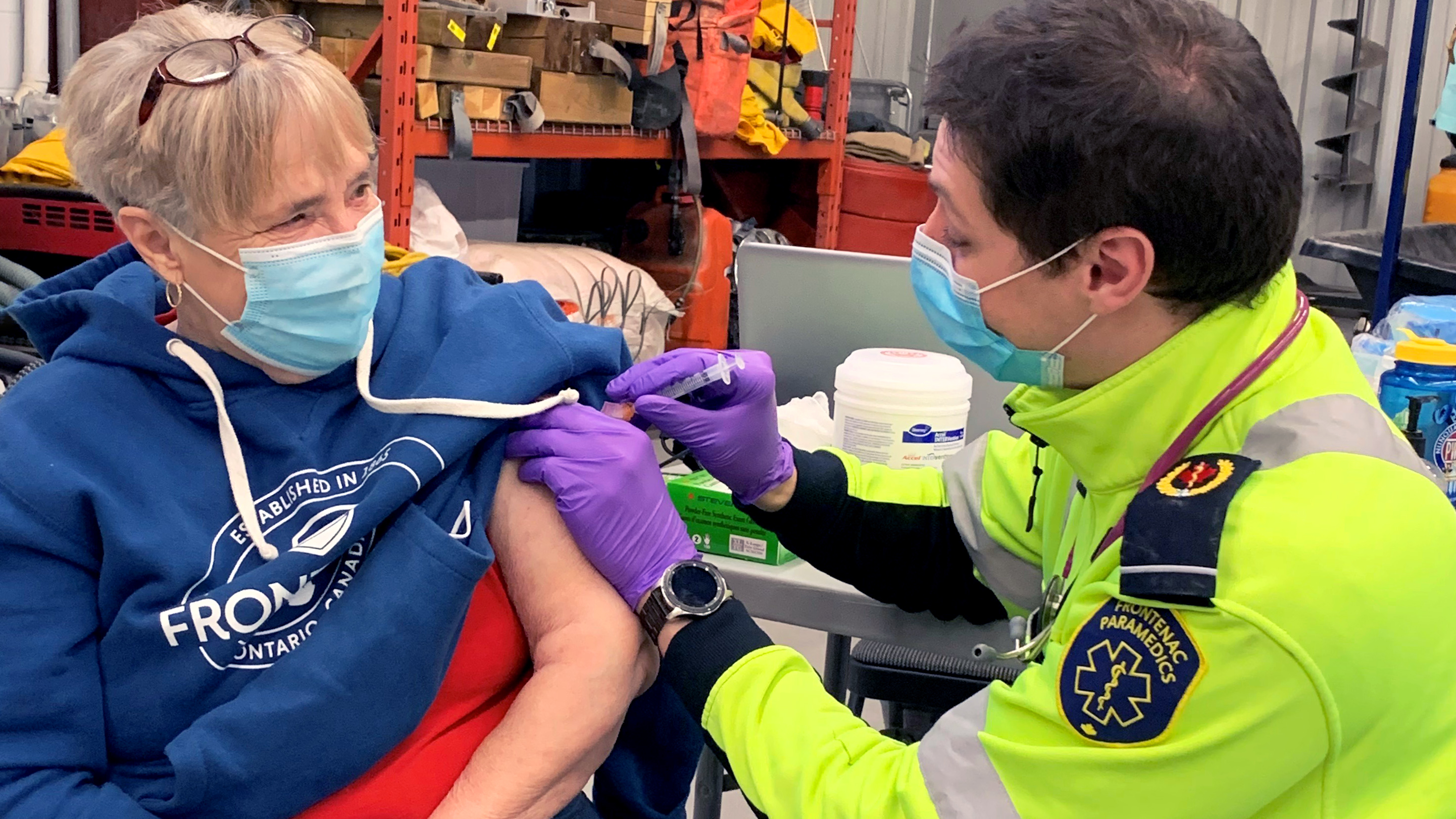
    Frontenac Paramedics respond to emergencies across the County and City of Kingston. Increasing demand and offload delay at hospital constrain paramedics’ availability.

    Council authorized $3.7 million in new capital projects. That's more bases, more ambulances, and more equipment. It also added more than a $1 million in annualized operating spending to support the addition of five 12-hour shifts during the term, totaling 21,900 annualized ambulance crew coverage hours. Council also invested in education positions, and other leadership resources.

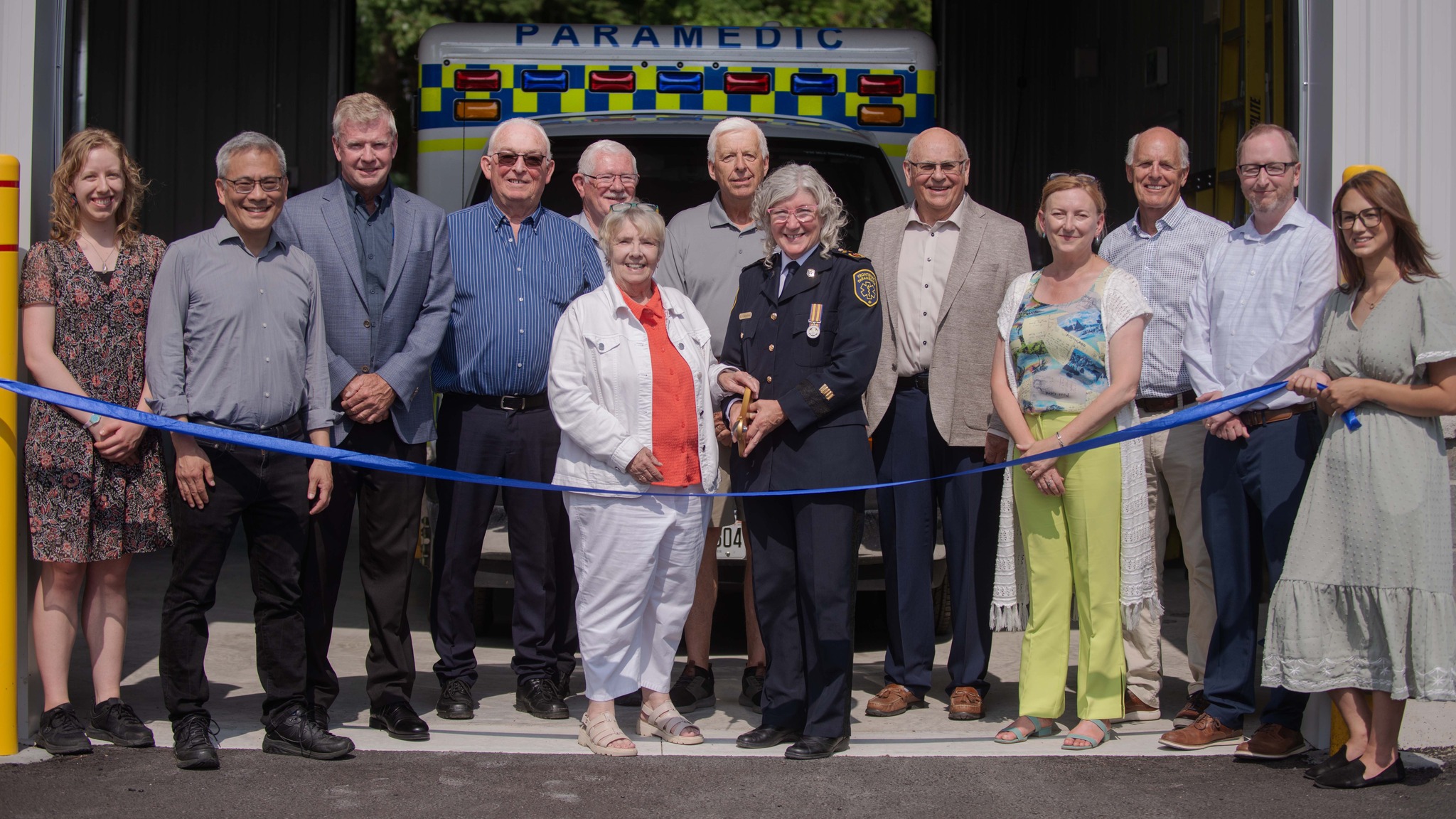
    The new Battersea Paramedic Station opened in 2024 through a cost-sharing partnership with the City of Kingston. Work also advanced on the joint Fire/Paramedic station on Taylor Kidd Boulevard in Kingston, which will provide two new bays with capacity for up to four ambulances.

    Council and its partners also continue to fund nursing support at the emergency department at KGH so patients transfer into hospital care and Paramedics return to the community more quickly.

    Adding capacity and ensuring Paramedic resources are deployed as efficiently as possible are keys to helping Paramedics arrive as quickly as possible for every emergency.

    Helping people live longer in their own homes

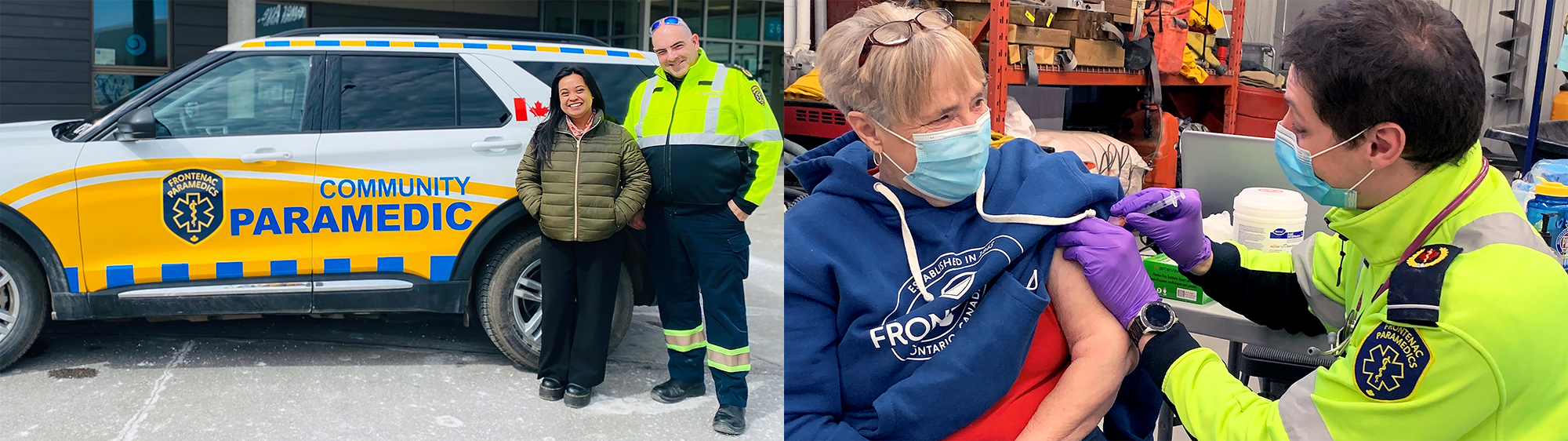
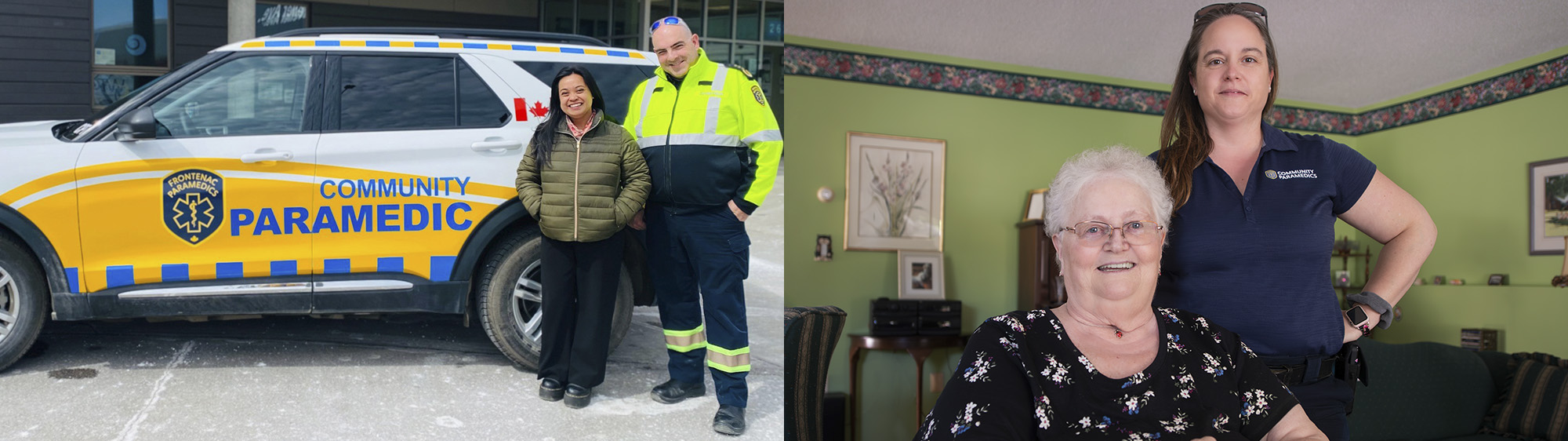
    Community Paramedics visit residents at home, providing assessments, monitoring, referrals, and other support that can help people manage their health, remain in the comfort of their own homes longer, and reduce demand pressure on emergency medical services.

    Council committed County funding to keep the Community Paramedicine operating while long-term provincial funding remained uncertain. Long-term funding subsequently became more secure.

    By May 2026, eight full-time-equivalent community paramedics were supported by $1.98 million in annual provincial funding from the Community Paramedicine for Long-Term Care program, and an additional $375,625 from Ontario Health.

    As of October, 2026, community paramedics recorded 8,267 in-person visits during the term.

    The highest standard of care for Fairmount residents

    Residents of Fairmount Home depend on nursing professionals and other staff for care around the clock. Council continued investing in the people and resources needed to provide the highest standard of care.

    In 2025, 98 percent of residents and families reported satisfaction with the care and services they received - the highest result in a decade. Fairmount staff also effectively reached Ontario’s four-hours-of-care-per-resident-per-day benchmark. Two Ministry of Long-Term Care inspections in May and July 2026 reported no findings of non-compliance.

    Council authorized four new care positions during the term: a new nurse practitioner, night-shift registered nurse, occupational therapist, and recreationist.

    Fairmount staff demonstrate their commitment to excellence through continuous improvement through the Home’s annual Quality Improvement Plan, Registered Nurses’ Association of Ontario Best Practice Spotlight Organization work, and CARF accreditation.

    Looking forward, Fairmount’s building is approaching the end of its service life. Council is planning for redevelopment, including an increase in capacity. Adding beds and rebuilding for the future will be an important decision for the next Council.

    Supporting access to primary care

    Council donated $220,000 to the University Hospitals Kingston Foundation (UHKF) to support healthcare in southeastern Ontario during the term, $54,000 in each of 2023, 2024, 2025, and 2026. Successive Frontenac County Councils have reaffirmed 10-year donation commitments to UHKF from 2008.

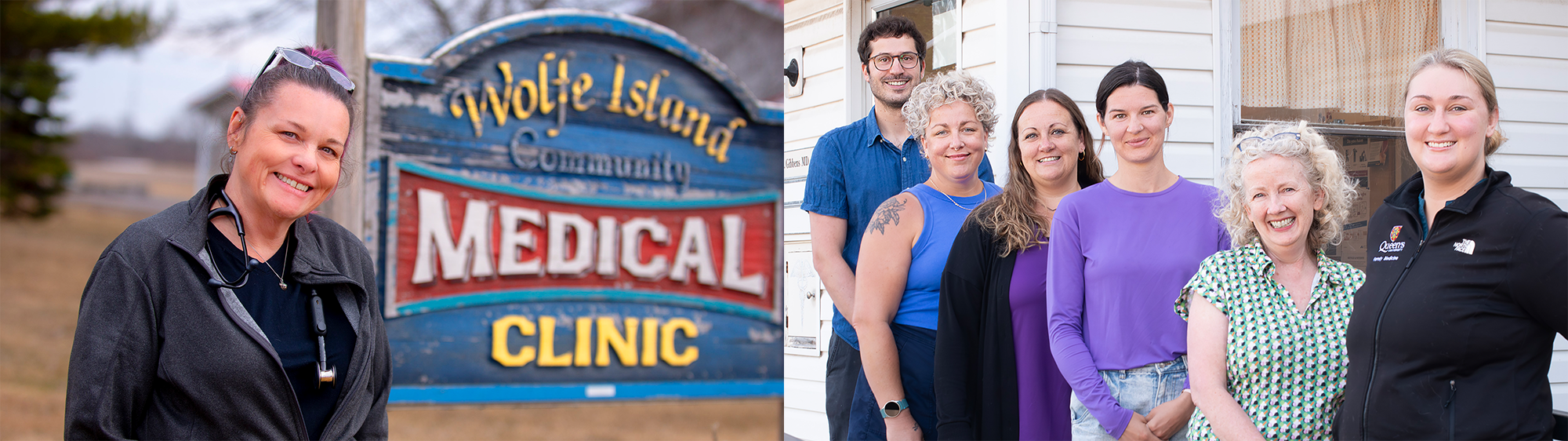
    Council supported physician-recruitment work during the term with financial contributions and partnerships. It contributed $17,500, matched by the Township of Frontenac Islands, toward a nurse-practitioner pilot serving Wolfe Island. By June 24, 2026, the nurse practitioner had seen 255 residents. Council also contributed $15,000, a supplement to $75,000 dedicated by the Township of North Frontenac, to support a second physician at the Northbrook Clinic, for residents of North Frontenac. Council also allocated $3,500 for membership in the Eastern Ontario Recruitment Alliance (EOPRA),

    Council and staff continue to work with partners and to advocate for better access to family doctors and primary care across Frontenac.

    Helping people get where they need to go

    In a large rural area like ours, residents often depends on reliable transportation over long distances.

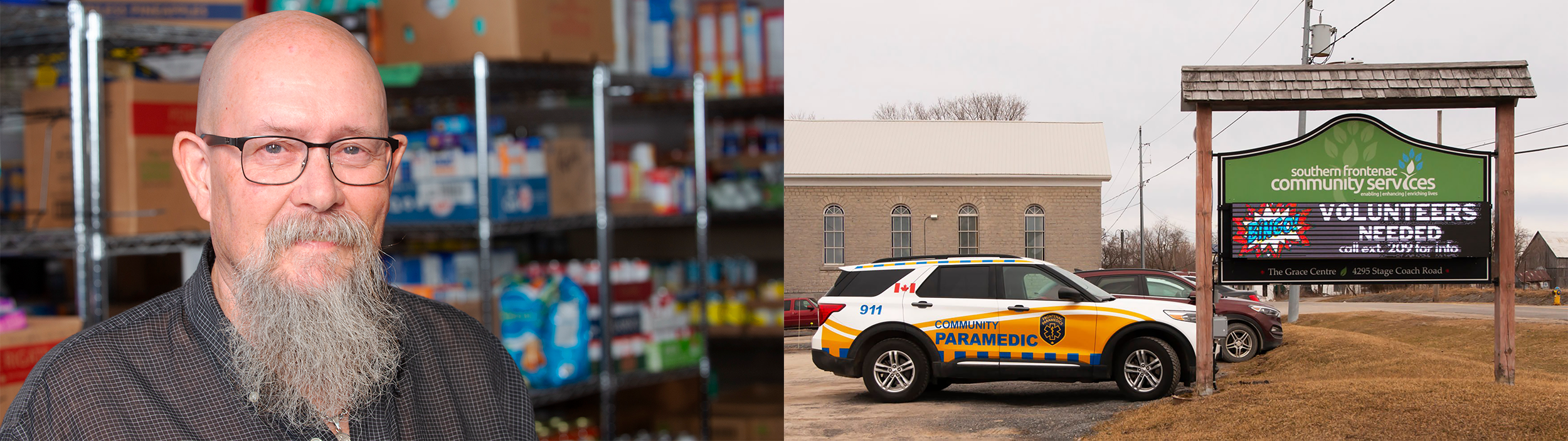
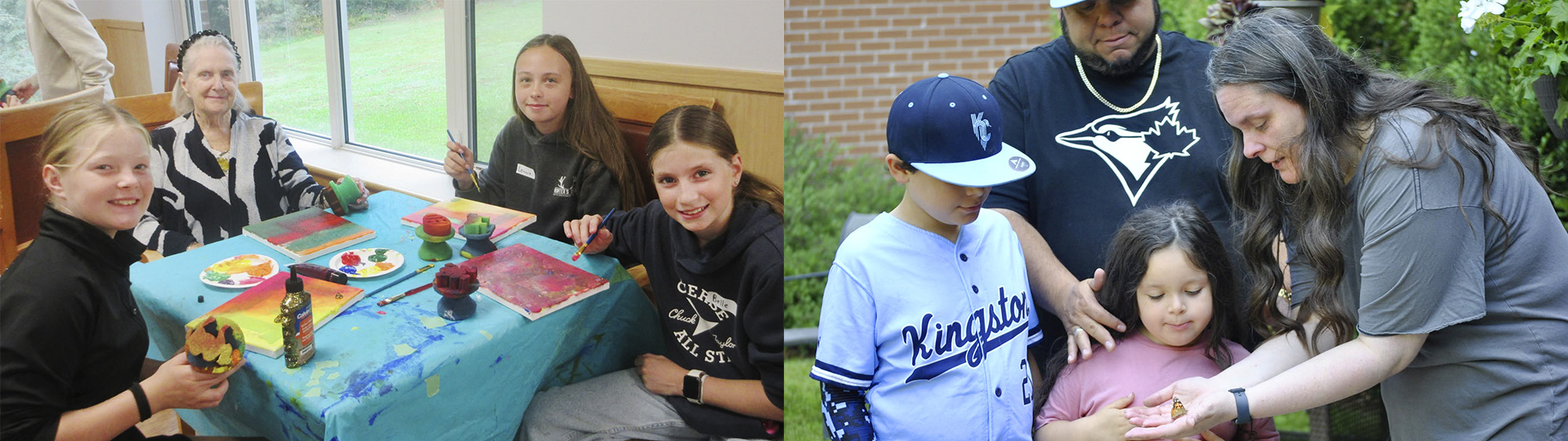
    County Council continued to provide $96,000 each year to support community transportation delivered by volunteer drivers from Rural Frontenac Community Services and Southern Frontenac Community Services. Staff and volunteers help residents travel to medical appointments, adult day programs, shopping, social activities, and other destinations. The service is particularly important for residents who cannot drive or who have otherwise limited transportation options.

    Transportation in rural areas for the people who need it is the connection between home in a rural community and needed care, services, and people.

    Food on the table

    Those same volunteer drivers from Rural Frontenac Community Services and Southern Frontenac Community Services also delivered groceries and prepared meals to qualified residents during the council term.

    County Council also provided $6,500 in financial support to the Food Policy Council of Kingston, Frontenac, Lennox & Addington to further its work as a forum for discussing food issues, to assess the community food system in KFL&A, and to inform and influence food and food-related policies and programs in the region.

    What comes next

    Caring for people will continue to require choices beyond this Council term. The next Council will face decisions about Fairmount redevelopment, Paramedic capacity and infrastructure, Community Paramedicine, healthcare partnerships, and community transportation, while increasing demand and workforce pressures continue to affect many of these services.

    Frontenac Paramedics • Fairmount Home • Healthcare in our Community • Rural Frontenac Community Services Transportation Services • Southern Frontenac Community Services Transportation Services • Back to County Council Progress and Priorities

  • Planning for growing communities

    supporting image

    More housing, new approaches to rural servicing, responsible development, and protecting what makes Frontenac a place people want to call home.

    Making room for more homes

    From 2023 through 2025, eligible residential building permits represented 443 dwelling units, while planning approvals created 117 new residential lots through consents. Not every permit or new lot represents a completed home today, but each indicates additional new housing capacity across Frontenac.

    Frontenac County planners work with township staff, property owners, builders, developers, agencies, and residents as proposals move through the planning process. Their work helps balance the need for more housing

    More housing, new approaches to rural servicing, responsible development, and protecting what makes Frontenac a place people want to call home.

    Making room for more homes

    From 2023 through 2025, eligible residential building permits represented 443 dwelling units, while planning approvals created 117 new residential lots through consents. Not every permit or new lot represents a completed home today, but each indicates additional new housing capacity across Frontenac.

    Frontenac County planners work with township staff, property owners, builders, developers, agencies, and residents as proposals move through the planning process. Their work helps balance the need for more housing with the protection of the rural landscapes, natural resources, and communities that make Frontenac a desirable place to live.

    New, right-sized options for rural development

    In rural communities, providing water and wastewater services traditionally means choosing between prohibitively expensive municipal systems and well-and-septic systems. Council and staff see another option for our towns and hamlets.

    Communal systems are a way to bridge the cost and efficiency gap between expensive traditional municipal treatment systems and individual well-and-septic systems. Shared systems can serve multiple properties. Professional operators oversee those systems over the long term. Although communities around the world use communal systems, Ontario municipalities do not yet use them widely as an alternative to traditional municipal systems. Frontenac councillors and staff are pioneering their application in rural Ontario.

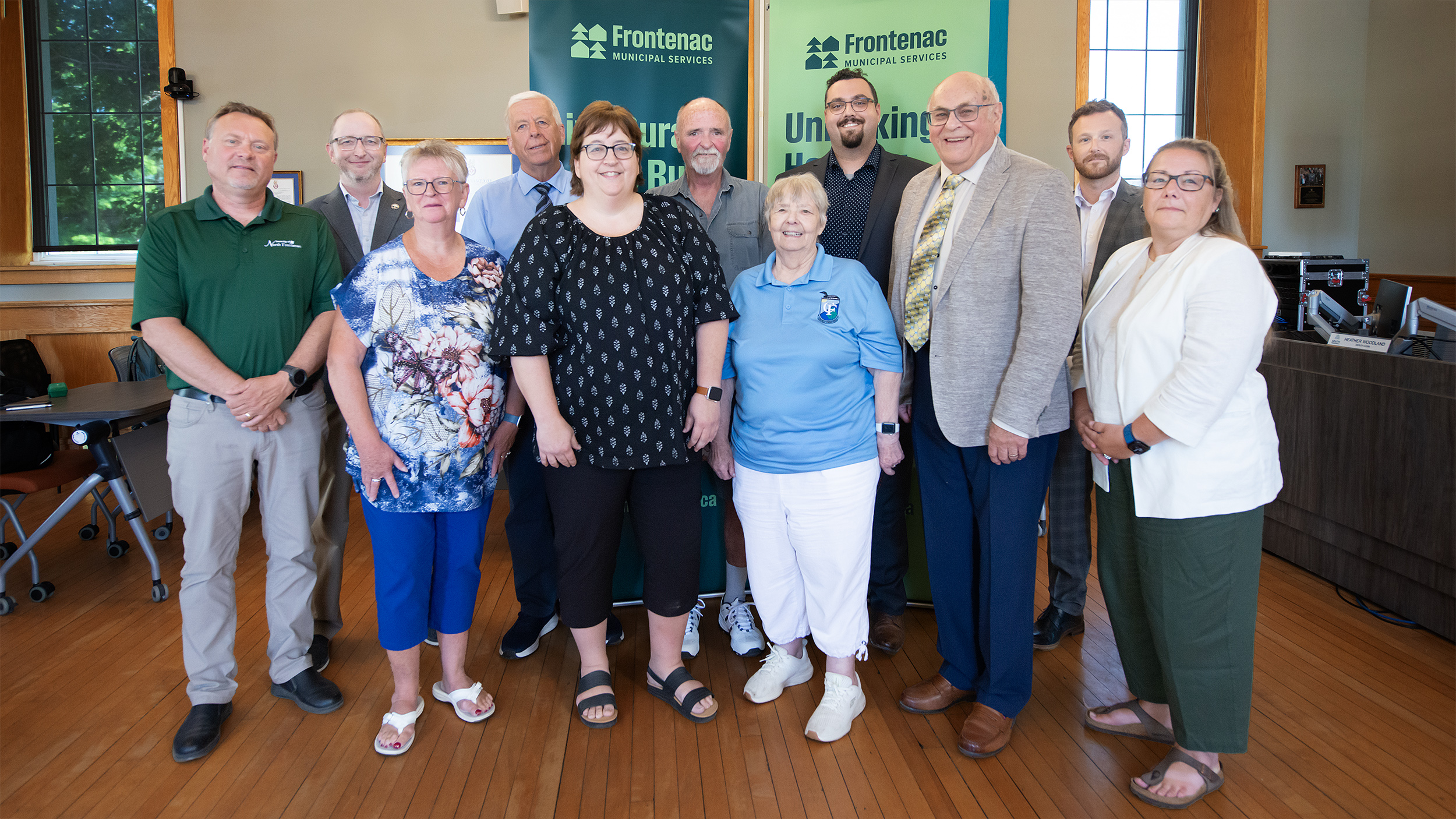
    Council supported the governance, planning, and advocacy work needed to move this approach forward. In 2023, the County and Frontenac’s four townships established Frontenac Municipal Services, which provides policy, advocacy, and operational frameworks for communal systems.

    The benefits extend beyond water and wastewater. Communal servicing can give municipalities, builders, and landowners more options for development, support additional housing choices, use land more efficiently, help communities grow within villages and hamlets, and provide professional long-term oversight of shared infrastructure.

    From an idea to bricks and mortar

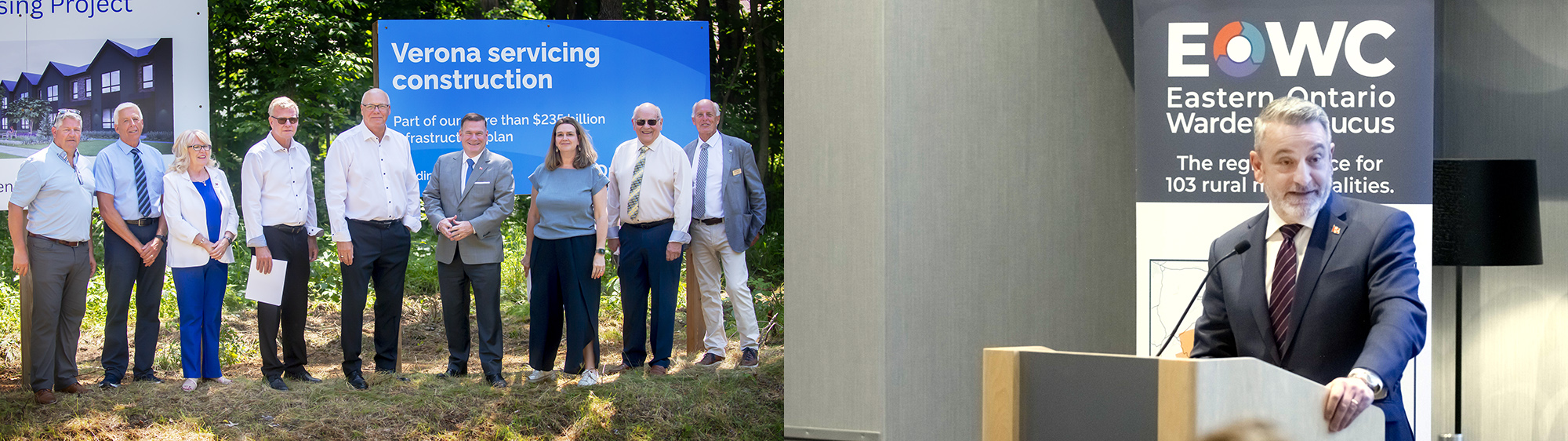
    Councillors and Frontenac Municipal Services staff present land parcels in Verona, Marysville, and Sharbot Lake as ready opportunities where communal servicing could expand development and housing options in rural settlement areas.
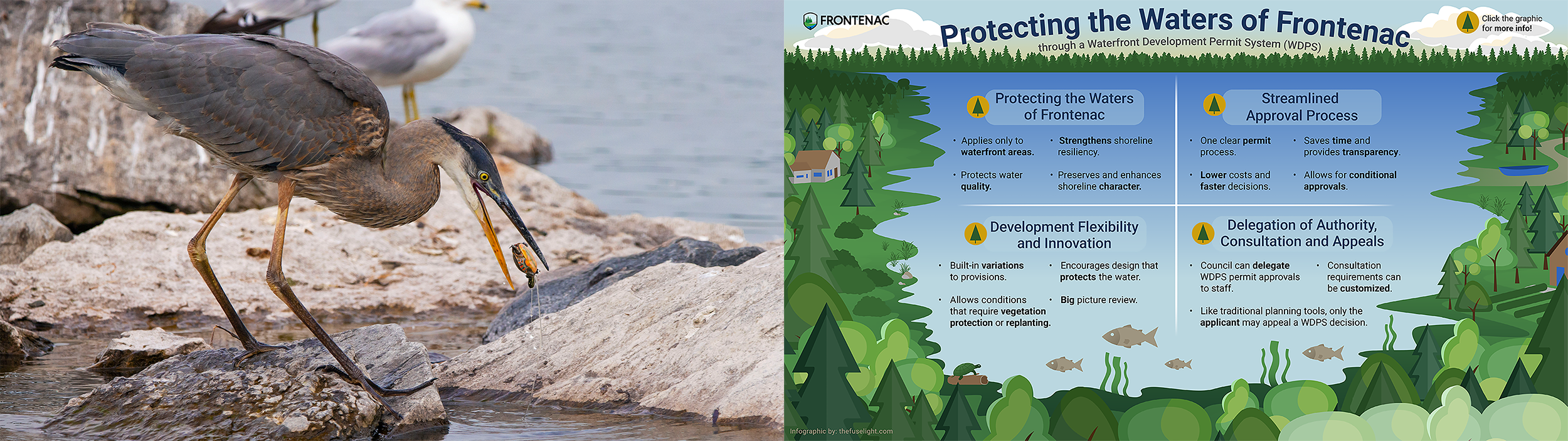
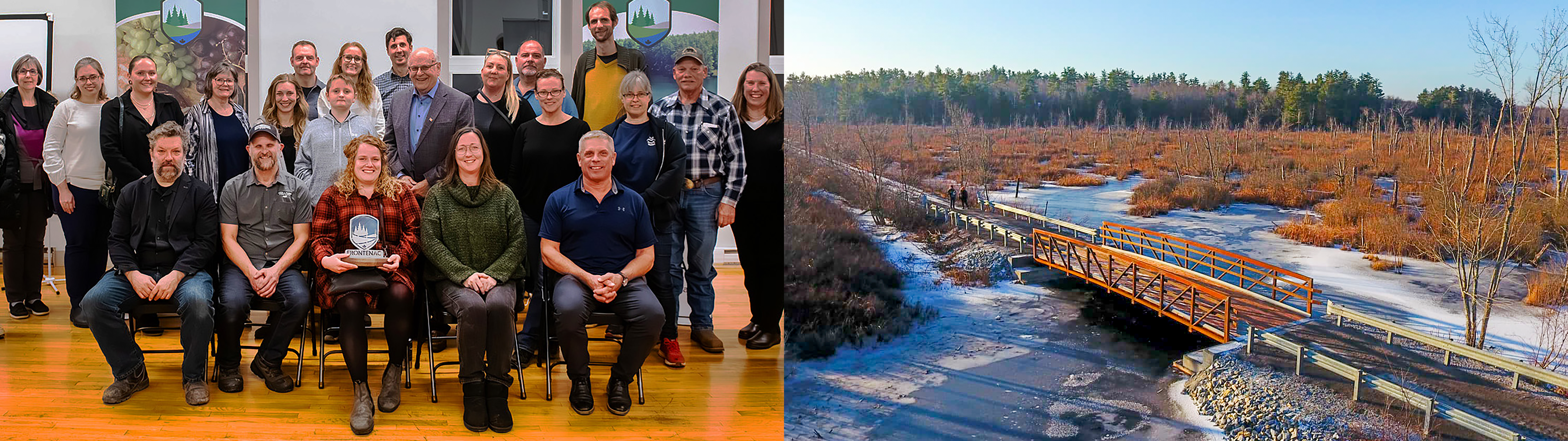
    Verona is furthest advanced. The Township of South Frontenac secured $3.2 million in provincial Housing-Enabling Water Systems Fund support for communal servicing associated with a mixed-housing development of approximately 100 units.

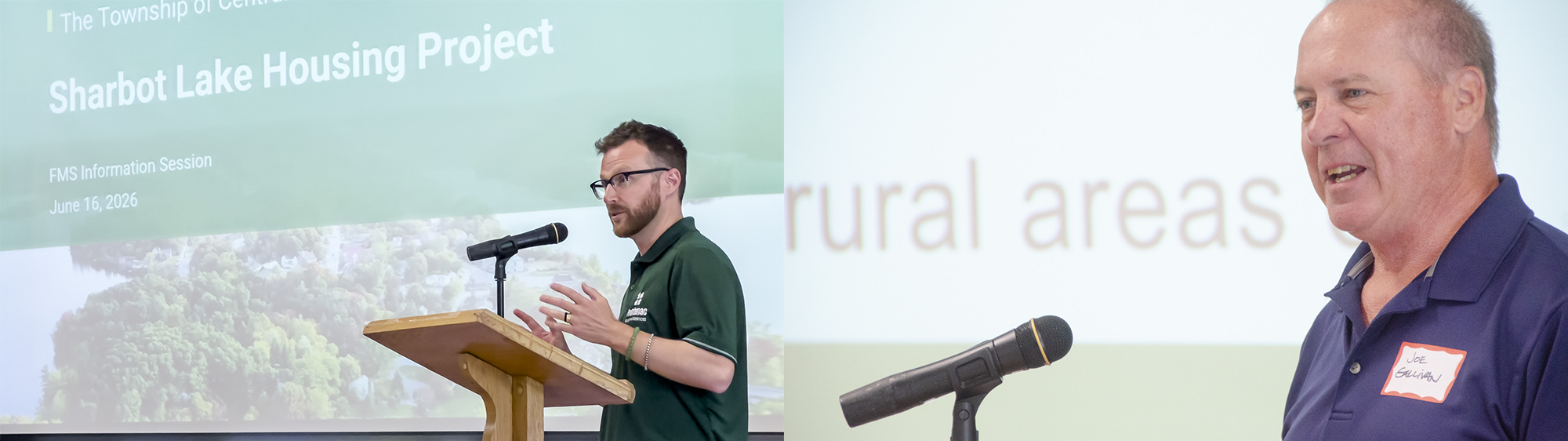
    At the former Sharbot Lake Public School property in Sharbot Lake, councillors and staff see an opportunity for infill and mixed-use development close to main street.

    On Wolfe Island, the Province’s investment in the new ferry and terminals, together with new year-round direct service between Marysville and Kingston, creates new opportunities for growth and development in Marysville. Councillors and staff are working with the Township of Frontenac Islands and provincial partners as they plan for that inevitable growth.

    Protecting what people value

    Growth implies important choices about where development should happen and what lands need protection.
    Council approved updated Environmental Impact Study guidelines, supported new floodplain mapping, and advanced a Natural Heritage Study. Planners use this work alongside provincial policy and other planning tools when they assess development proposals.

    Council and township partners are exploring new tools such as a Community Planning Permit System, which will combine and streamline elements of zoning, site-plan control, and minor variances at shorelines while keeping clear and sensible requirements for development.

    Councillors and staff advocate to reform provincial planning and approval processes that allow municipalities, builders, and landowners to move appropriate development forward without unnecessary complexity or delay.

    The objective is not simply more development. It is to give communities room to grow while considering water, infrastructure, natural heritage, flood risk, and the characteristics that make rural Frontenac an attractive place to live and do business.

    Growth supports our rural economy

    More residents and visitors create opportunities and needs for businesses and communities. Council supported various economic development initiatives during the term.
    Recreational infrastructure brings people into Frontenac’s communities. Council continued investing in completion of the Frontenac K&P Trail, including the Elbow Creek Bridge, Snow Road Station lands, and improvements at the Sharbot Lake trailhead and accessible washroom. County economic development staff estimate142,378 visits to the Frontenac K&P Trail in 2025 and estimate trail visitors generated $1.81 million in direct visitor spending that year. For perspective, Council authorized almost $2 million in K&P Trail capital work during the term, including trail additions, trail improvements, and the Elbow Creek Bridge replacement.

    Council also committed up to $258,000 to phase-in an additional Community Development Officer staff position to expand capacity for business support, tourism, investment attraction, and workforce development.

    Staff work directly with entrepreneurs and business operators. The 2025 Economic Development annual report provides the clearest measurable snapshot of this direct support: Staff recorded 242 tracked business interactions and visited 36 businesses.

    What comes next

    Many of the most consequential growth decisions still lie ahead. Councillors will continue making decisions about major development proposals, communal servicing, village and hamlet growth, natural heritage protection, and the infrastructure communities need as Frontenac grows.

    Frontenac County Planning and Development • Frontenac Municipal Services • Community Planning Permit System • Natural Heritage Study • Frontenac K&P Trail • Economic Development • Back to County Council Progress and Priorities

  • Council investments you can touch

    supporting image

    Paramedic bases, ferry infrastructure, trail improvements, and other physical investments made during the Council term

    Building space for Paramedics

    Adding Paramedic capacity requires more than hiring people. Paramedics also need appropriate stations, vehicles, equipment, and space to work and train.

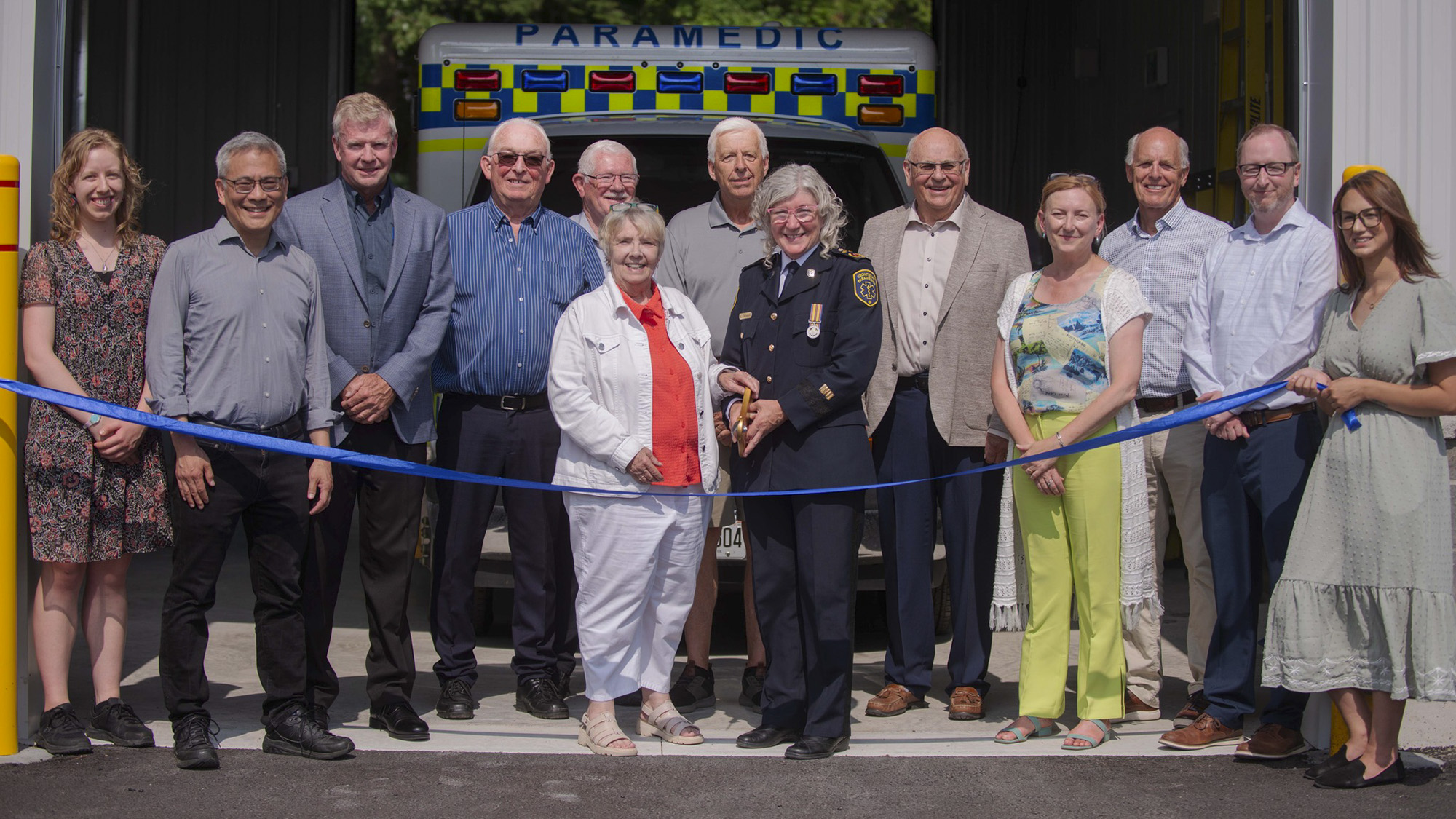
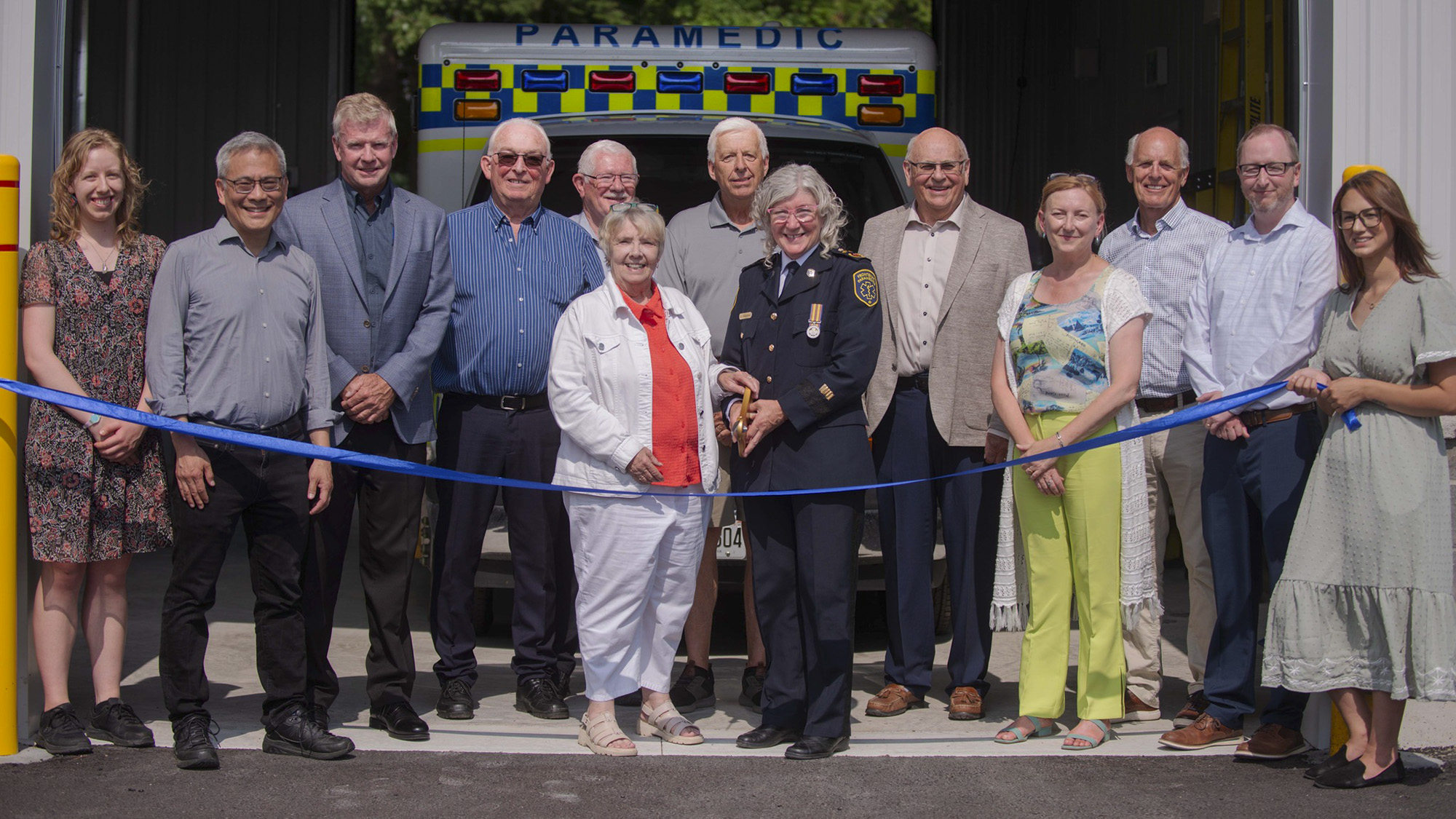
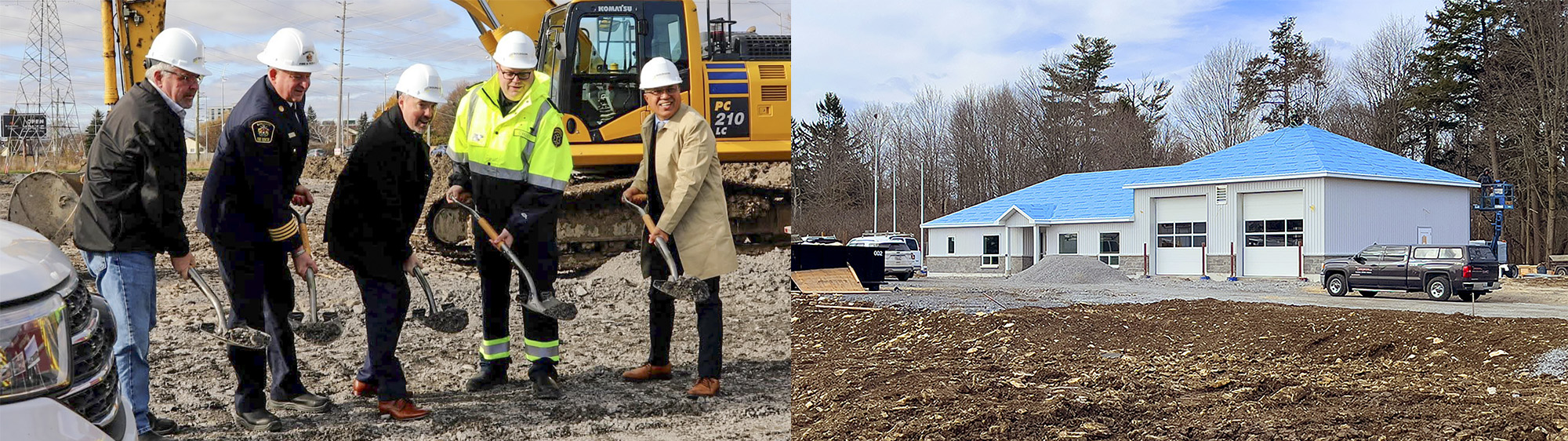
    Council and the City of Kingston jointly invested more than $3 million in the new Battersea Paramedic Station. Paramedics began operating from the new station in 2024. Council also advanced the County’s participation in a new joint Fire/Paramedic station on Taylor Kidd Boulevard in Kingston. Plans include two Paramedic bays with capacity for up to four ambulances

    Paramedic bases, ferry infrastructure, trail improvements, and other physical investments made during the Council term

    Building space for Paramedics

    Adding Paramedic capacity requires more than hiring people. Paramedics also need appropriate stations, vehicles, equipment, and space to work and train.

    Council and the City of Kingston jointly invested more than $3 million in the new Battersea Paramedic Station. Paramedics began operating from the new station in 2024. Council also advanced the County’s participation in a new joint Fire/Paramedic station on Taylor Kidd Boulevard in Kingston. Plans include two Paramedic bays with capacity for up to four ambulances. Construction is expected to be completed in early 2027.

    Keeping Howe Islanders connected

    For Howe Island residents, ferry infrastructure is part of the route to work, school, appointments, shopping, and other services. Council continued to advocate for appropriate provincial support for the ferry service.

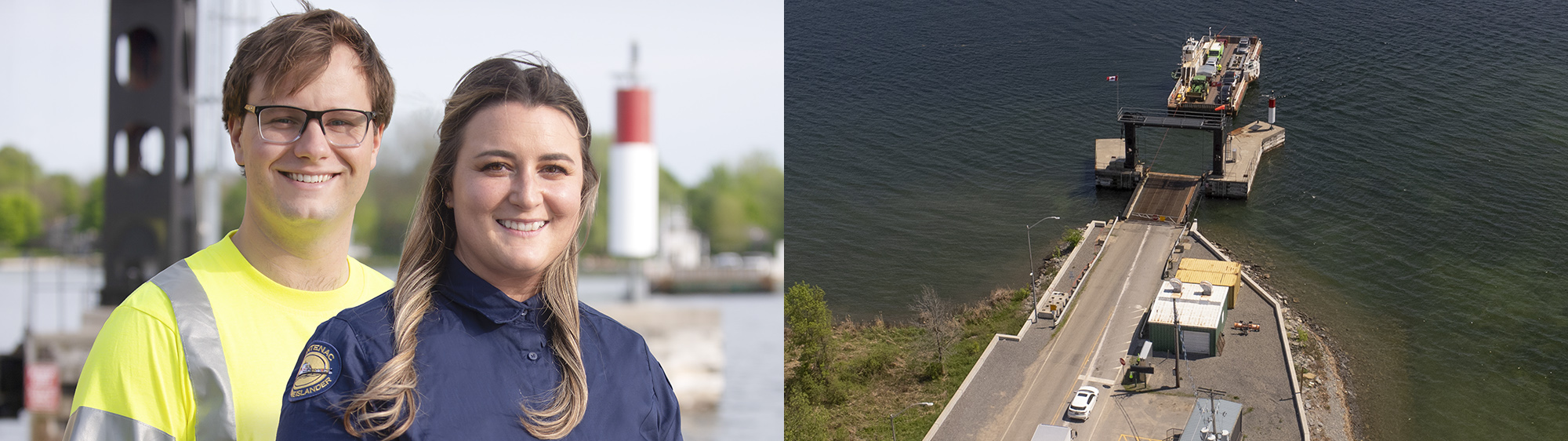
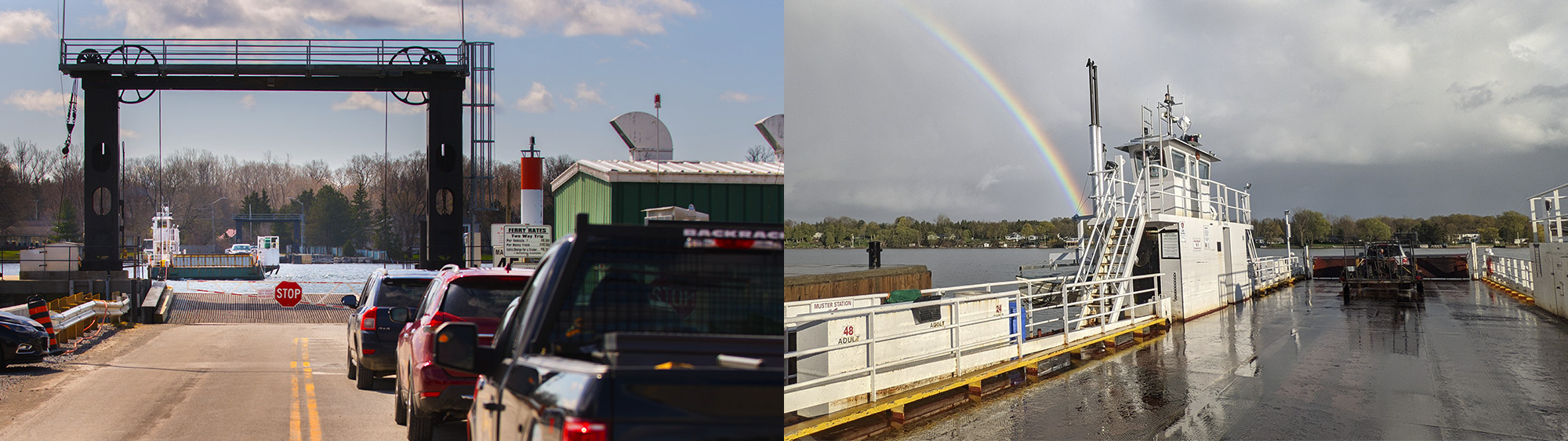
    County staff operate the Howe Island County Ferry. Council funds a small share of the service and infrastructure costs while working with provincial partners on operational and capital funding. In 2025, ferry staff recorded 249,186 passenger crossings and 47,760 ferry trips.

    The Ministry of Transportation Ontario (MTO) who owns the vessel and docks, completed extensive dock improvements in June 2026.

    Investing in the Frontenac K&P Trail

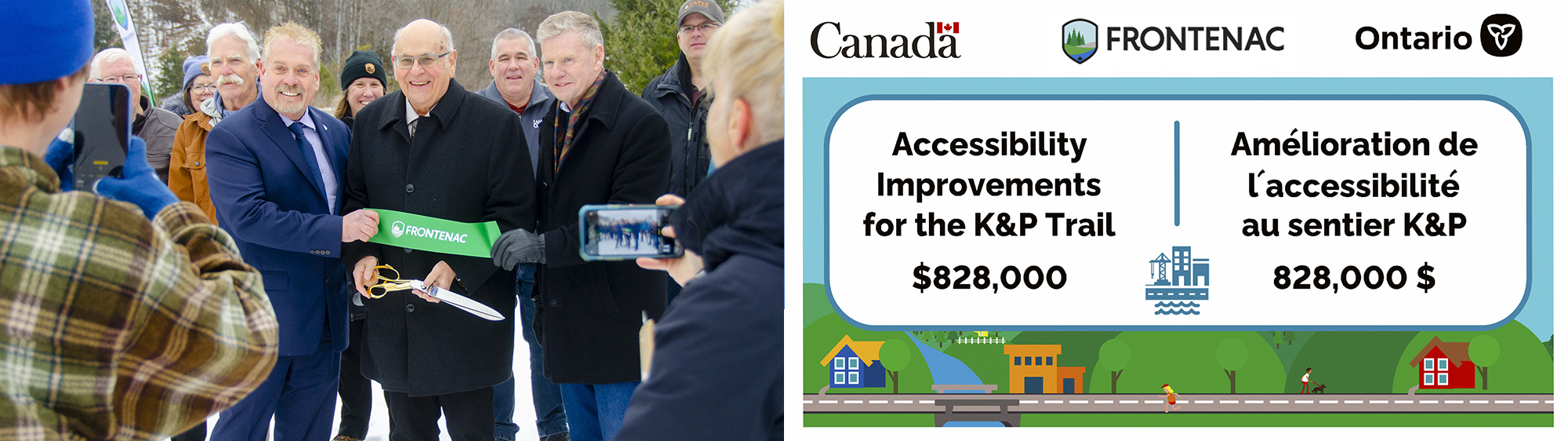
    Council invested $2 million during the term and worked with the governments of Ontario and Canada to build-out the Frontenac K&P Trail as recreational infrastructure and a connection among communities.

    During the term, Council invested in the Elbow Creek Bridge, which opened in December 2023; acquired the Snow Road Station lands in 2025; and supported improvements at the Sharbot Lake trailhead and accessible washroom in 2026.

    County economic development staff estimated 142,378 visits to the trail in 2025 and estimate trail visitors generated $1.81 million in direct visitor spending that year.

    As more trail infrastructure is completed, councillors and staff will turn their attention more to maintaining what has been built, improving the experience for trail users, strengthening connections with communities and businesses, and making the most of the trail’s recreational and economic potential.

    Renewing the County administration building

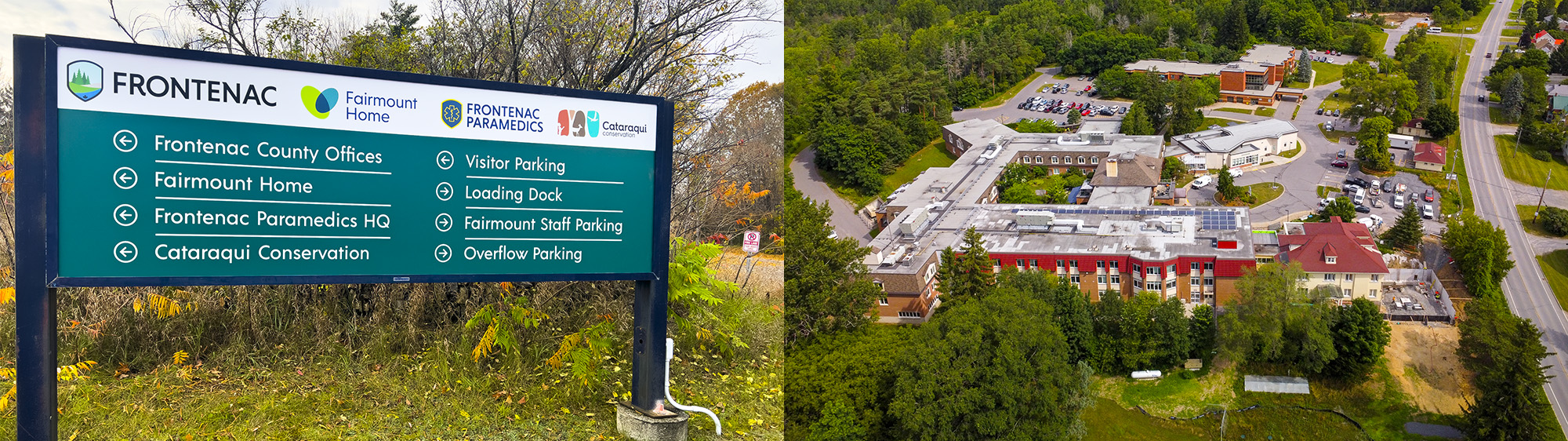
    Council completed redevelopment of the County Administration Building in 2024. The project renewed a major County-owned asset and provided functional space for County administration and Council operations.

    Saving for the things we’ll need tomorrow

    Building or buying a capital asset is only the beginning of its cost. Ambulances eventually need replacement. Buildings require major repairs and renewal. Ferry infrastructure, trail structures, and other County assets require constant maintenance and eventual renewal or replacement. Council must therefore consider both what residents need today and how future councils and residents will pay to maintain and replace the assets that deliver those services.

    During the term, Council progressively increased the amount the County puts aside each year for future capital needs. Budget measures added about $81,000 a year to capital-reserve contributions in 2024, $216,000 in 2025, and $241,000 in 2026.

    One way Council did this is through a dedicated capital component of the County property-tax levy. Council increased that component from 0.65 percent of the County levy in 2024 to 1.0 percent in 2025 and 1.6 percent in 2026. For a residential property rate payer, the 2026 dedicated capital increase works out to approximately $3.50 a year for every $100,000 of property tax assessment.

    Putting money aside over time helps future councils prepare for much larger costs when County assets need repair or replacement.

    What comes next

    The next Council will inherit recently completed investments and decisions about Paramedic facilities, Fairmount redevelopment, ferry infrastructure, trail assets, vehicles, equipment, buildings, and other long-term capital needs. It will also inherit the responsibility to decide how quickly to build reserves for those future costs while continuing to fund the services residents use today.

    2026 Frontenac County Budget Process • Frontenac Paramedics' Plan for the Future • Howe Island County operated ferry • Frontenac K&P Trail Information Hub • Working with Fairmount Home • Back to County Council progress and priorities

  • Protecting what we value

    supporting image

    How Council protects natural areas, prepares for emergencies, reduces energy use, and looks after infrastructure residents will rely on tomorrow.

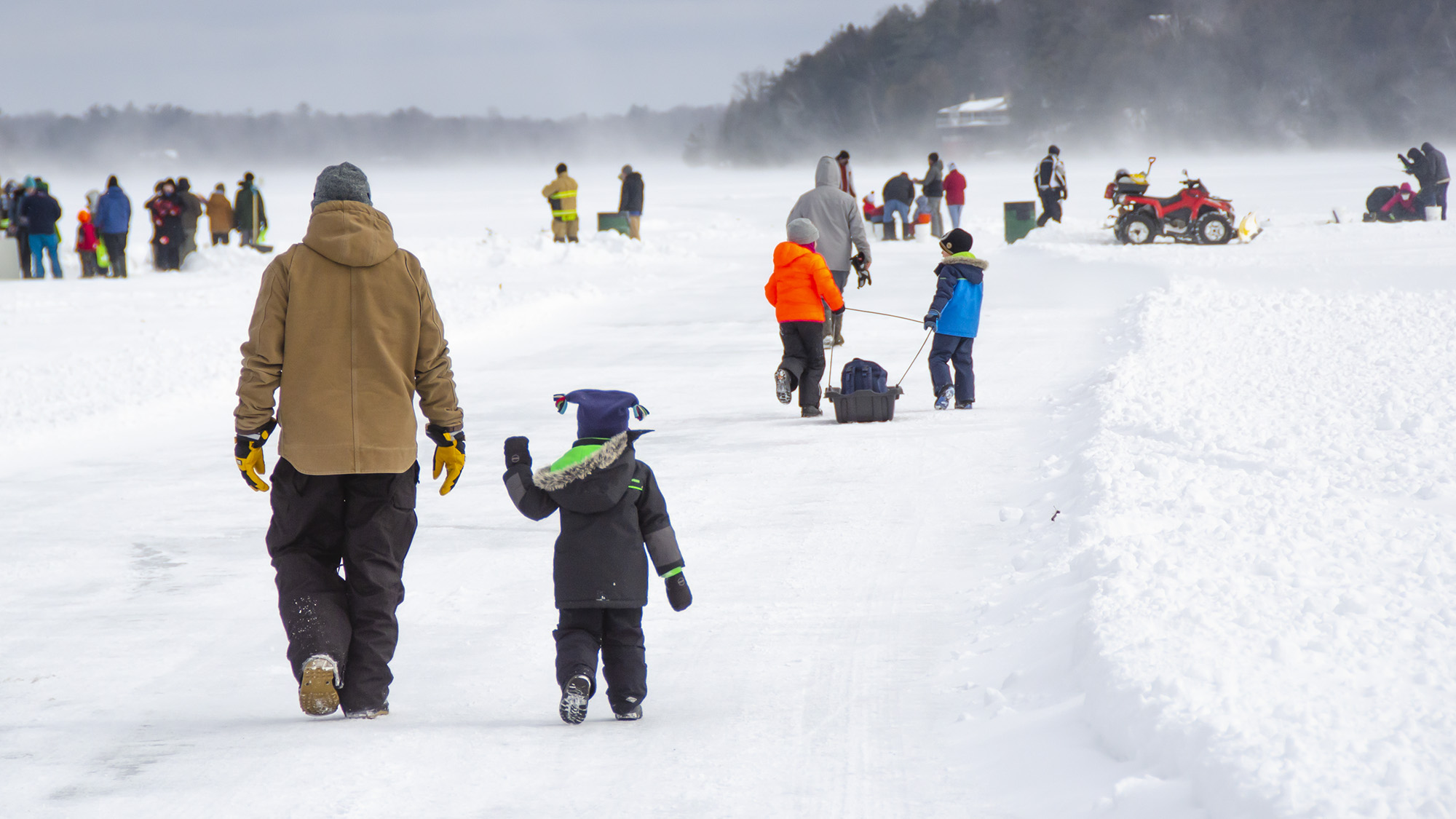
    Frontenac’s lakes, forests, shorelines, rural communities, and public infrastructure are part of what makes this a special place to live. Protecting them requires foresight, adaptability, and long-term planning. During the 2022-2026 term, Council supported work to better understand natural hazards and natural heritage, reduce energy use in County facilities, prepare for emergencies, and plan for the infrastructure residents will need in the future.

    Planning growth with better environmental information

    As Frontenac grows, councillors and planners need the best possible information

    How Council protects natural areas, prepares for emergencies, reduces energy use, and looks after infrastructure residents will rely on tomorrow.

    Frontenac’s lakes, forests, shorelines, rural communities, and public infrastructure are part of what makes this a special place to live. Protecting them requires foresight, adaptability, and long-term planning. During the 2022-2026 term, Council supported work to better understand natural hazards and natural heritage, reduce energy use in County facilities, prepare for emergencies, and plan for the infrastructure residents will need in the future.

    Planning growth with better environmental information

    As Frontenac grows, councillors and planners need the best possible information about where development can happen and where additional protections are needed.

    Council approved updated Environmental Impact Study guidelines during the term. Staff continued work with conservation authorities, township staff, property owners, and other partners to protect our natural heritage as development proposals move through the planning process.
    Council advanced a Natural Heritage Study in 2026. Staff will use the outcomes of that work to inform future planning and development decisions.

    Understanding flood risk

    Flooding can affect homes, roads, infrastructure, and choices about future development. Understanding how and where flooding may occur helps determine how best to control water levels, where it may be unsafe to build, and how to minimize risks to people and property.

    In 2024, Council participated in a $213,500 floodplain-mapping project led by Cataraqui Conservation in partnership with the City of Kingston and Township of South Frontenac. Council approved $12,099 from the County’s Sustainability Reserve toward Frontenac’s share of that project.

    Using less energy in County facilities

    Council oversees the amount of energy used in County-owned facilities.

    Staff reported a 23-percent reduction in greenhouse gas emissions and an 11.4 percent decrease in energy use in County facilities between 2018 and 2023. They set a further one percent annual reduction target from 2024 through 2028.

    Hope for the best, prepare for the worst

    Severe weather, flooding, extended power outages, major transportation disruptions; Emergencies happen with little warning. Preparing for the unexpected is part of Council’s work.

    County staff worked with township emergency-management staff, first responders, community partners, Emergency Management Ontario, and other agencies during the term to plan and practice for emergencies that could affect Frontenac communities.

    Council supports that work through emergency planning, training and exercises, continuity planning, and coordinating and providing resources needed when services are disrupted. Much of that preparation happens quietly in the background.

    Looking after what we’ve built

    Protecting what people value also means taking care of the public infrastructure on which they rely. That work is easy to overlook because maintenance attracts less attention than new buildings or vehicles. But looking after existing assets is critical to maintaining reliable public services over the long term.

    During the term, Council invested in maintaining Paramedic facilities, trail assets, vehicles, equipment, and more. Council also increased the funds set aside for capital reserves each year, so future councils have financial resources available when assets require major repair or replacement.

    What comes next

    Protecting Frontenac requires the next council to balance growth, environmental protection, emergency preparedness, and the cost of maintaining public infrastructure. Staff will continue advancing natural-heritage work, monitoring energy use, preparing for and practicing emergencies with partners, and maintaining the assets on which residents depend.

    Natural Heritage Study • emergency management • 2026 Frontenac County Budget Process • Back to Frontenac County Council Progress and Priorities

  • Working together for Frontenac

    supporting image

    Why Frontenac works with other municipalities, governments, organizations, and residents - and how working together gives rural communities a stronger voice.

    Working together for Frontenac

    Issues that matter to Frontenac residents do not stop at municipal boundaries. Healthcare, housing, major infrastructure, emergency services, transportation, broadband and cellular connectivity, and economic development require municipalities to work together and with other levels of government.

    There is strength in working together.

    Bringing our priorities to other governments

    Council advocated to provincial and federal government on issues related to Paramedic services and hospital offload delay, long-term care, ferry services, housing and infrastructure, broadband and

    Why Frontenac works with other municipalities, governments, organizations, and residents - and how working together gives rural communities a stronger voice.

    Working together for Frontenac

    Issues that matter to Frontenac residents do not stop at municipal boundaries. Healthcare, housing, major infrastructure, emergency services, transportation, broadband and cellular connectivity, and economic development require municipalities to work together and with other levels of government.

    There is strength in working together.

    Bringing our priorities to other governments

    Council advocated to provincial and federal government on issues related to Paramedic services and hospital offload delay, long-term care, ferry services, housing and infrastructure, broadband and cellular connectivity, high-speed rail routing, and access to family doctors and primary health care.

    Council seeks fair and sustainable provincial and federal funding for services and infrastructure upon which rural municipalities and their residents rely. That broader funding advocacy cuts across most of the individual issues Council raises with other governments.The Frontenac County Warden has a particularly active and visible role in this work, representing Council on provincial and federal stages alongside colleagues from other municipalities.

    Some advocacy produces immediate results. Other issues require municipalities to build and strengthen their cases repeatedly over several years across several Council terms.

    Shared association

    Wardens, Deputy Wardens, and Councillors work with neighbouring municipalities, other upper-tier municipalities, and rural municipalities across Eastern Ontario and the province. It’s work in which municipalities combine their voices in advocacy, while sharing costs, expertise, infrastructure, and staff. Frontenac County Council is particularly active in . . .

    • Eastern Ontario Wardens’ Caucus (EOWC): County wardens representing 13 municipalities work together advancing priorities that affect residents of rural Eastern Ontario with a collective and unified regional voice.
    • Association of Municipalities of Ontario (AMO): Municipal representatives from across Ontario work collectively on policy, funding, and other issues affecting all 444 municipalities across the province.
    • Federation of Canadian Municipalities (FCM): More than 2,000 municipal governments across the country advocate on federal policies and investments affecting member communities.
    • Eastern Ontario Regional Network (EORN): 113 Eastern Ontario municipalities work together to improve broadband and cellular connectivity and advance regional infrastructure priorities.
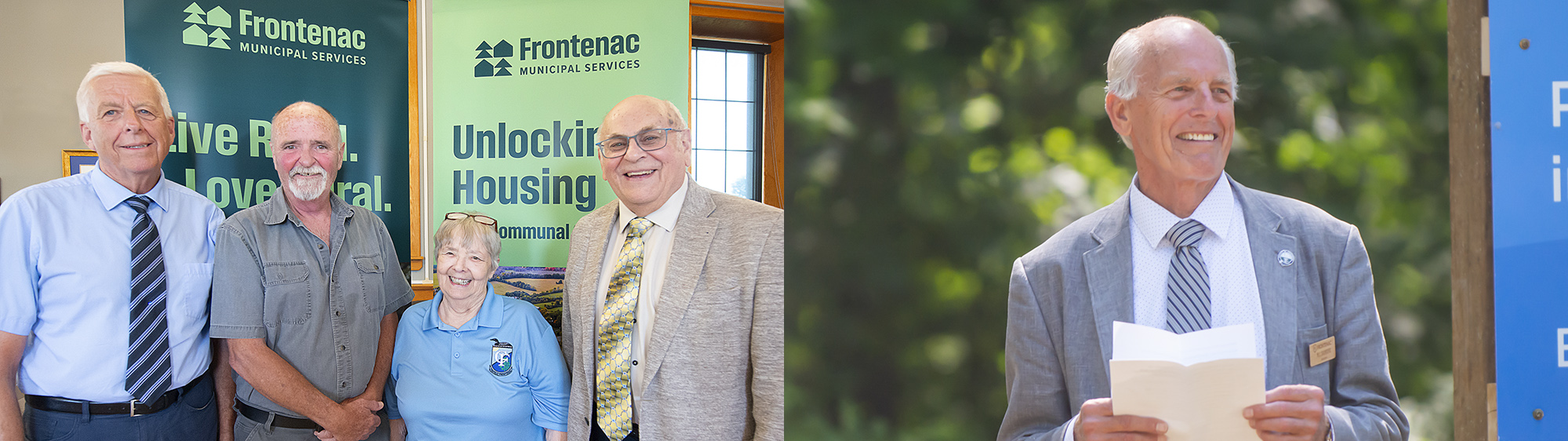
    • Frontenac Municipal Services (FMS): The County and its four member townships work through a jointly owned municipal services corporation to provide policy and operational leadership and frameworks for communal water and wastewater systems.

    Working with partners close to home

    Much of Council’s work also depends on people and organizations within Frontenac and our neighbouring communities. County staff work with colleagues at our member townships, the City of Kingston, and neighbouring municipalities. They work with healthcare providers, hospitals, conservation authorities, community-service organizations, emergency system partners, businesses, volunteers, and many more.

    The City of Kingston and County Council, for example, share costs for paramedic infrastructure and services and social housing programs and supports. Community organizations deliver transportation services with annual County funding. Healthcare partners work with Councillors and staff to improve access to primary care. Conservation authorities and municipal planners share information and expertise as they consider development and natural hazards.

    Working together does not mean every organization has the same responsibility. It means people bring their different responsibilities, resources, and expertise together to balance each other in pursuit of the public good.

    Council works for residents

    Council works for the people and communities its members represent. That means residents need practical ways to follow Council’s work, understand the choices being considered, and participate in decisions that affect them.

    Staff provide information about projects and opportunities for residents to participate through EngageFrontenac.ca.

    During the Council term, staff used EngageFrontenac for 82 projects. People made more than 160,000 visits to the site and submitted more than 3,500 survey responses used to inform Council decisions.Those figures show the scale at which staff and residents have used the platform for public engagement.

    Residents are welcome to attend Council meetings, contact their elected representatives, participate in public meetings and consultations, and provide input before Councillors make many major decisions.

    More than 82 EngageFrontenac.ca projects • Eastern Ontario Wardens' Caucus • Return to Frontenac County Council Progress and Priorities


  • More work moving forward

    supporting image

    Fairmount, Paramedic capacity, communal servicing, growth, ferries, the K&P Trail, and other work that will continue beyond this Council term.

    As this Council term ends, the work carries on.

    Some projects can be completed within four years. Others involve major infrastructure, provincial approvals, partnerships, long-term funding, or decisions that unfold over many years and several stages. The 2022-2026 Council advanced several major initiatives that the next Council will inherit, along with new choices about priorities, investment, and changing community needs.

    The future of Fairmount Home

    The existing Fairmount Home building is approaching the end of its service life. Council is

    Fairmount, Paramedic capacity, communal servicing, growth, ferries, the K&P Trail, and other work that will continue beyond this Council term.

    As this Council term ends, the work carries on.

    Some projects can be completed within four years. Others involve major infrastructure, provincial approvals, partnerships, long-term funding, or decisions that unfold over many years and several stages. The 2022-2026 Council advanced several major initiatives that the next Council will inherit, along with new choices about priorities, investment, and changing community needs.

    The future of Fairmount Home

    The existing Fairmount Home building is approaching the end of its service life. Council is preparing for redevelopment, including the potential to expand Fairmount from 128 to 160 beds.

    Redeveloping a long-term-care home is a major capital undertaking. The next council will need to make decisions about the scope, timing, funding, design, and delivery of the project, all while supporting Fairmount staff as they continue caring for residents in the existing building.

    The next Council will inherit both the opportunity to add long-term-care capacity and the responsibility to plan carefully for one of the County’s largest future capital investments.

    Staying ahead of paramedic service demand

    Council added $1 million in new annual Paramedic staffing during the term, supporting eight new full-time Paramedic positions in two additional 12-hour shifts. Council also invested in vehicles, equipment, bases, leadership, and other resources.

    But increasing demand pressure continues to affect Paramedic response times. Adding capacity and ensuring that Paramedic resources are deployed as efficiently as possible are keys to helping Paramedics arrive as quickly as possible for every emergency. And the paramedic profession is changing and evolving. Paramedics are becoming more specialized and more highly qualified than ever before, implying a need for ongoing investment in training and professional development.

    The next Council will continue making decisions about the people, vehicles, facilities, technology, and other resources Paramedics need as demand changes.

    Pioneering communal servicing for rural communities

    Council and staff are advancing a new approach to one of rural development’s persistent challenges: providing safe water and wastewater services at a scale rural communities can afford. Communal systems represent a way to bridge the cost and efficiency gap between expensive traditional municipal treatment systems and individual well-and-septic systems.

    Council supported the governance, planning, and advocacy work needed to move communal servicing forward during the term. The County and four member townships established Frontenac Municipal Services in 2023 to provides policy, advocacy, and operational frameworks for shared systems.

    Councillors and FMS staff present land parcels in Verona, Marysville, and Sharbot Lake as ready opportunities where communal servicing could expand development and housing options in rural settlement areas.

    But there are policy, regulatory, and cognitive hurdles that still need be to cleared before the full advantages of communal servicing are realized. The next Council will inherit the work needed to establish this new model as the new normal for rural development in Frontenac and across rural Ontario.

    Planning for more growth

    From 2023 through 2025, eligible residential building permits across Frontenac represented 443 dwelling units, and planning approvals created 117 new residential lots through consents. Larger proposals are also moving through the planning process. Collins Lake and Kinsland together represent 1,449 proposed dwelling units.

    Not every permit or new lot represents a completed home today, and proposed developments remain subject to the planning and approval process. But the figures give and idea of the scale of growth for which councillors and planners are preparing.

    As communities grow, the next councillors will continue making choices about housing, infrastructure, servicing, natural heritage, flood risk, and where development should occur. Staff will also continue advancing the Natural Heritage Study and other planning work that informs those decisions.

    New opportunities for Marysville

    On Wolfe Island, the Province’s investment in the new ferry and terminals, together with year-round direct service between Marysville and Kingston, creates new opportunities for growth and development in Marysville.

    Councillors and staff are working with representatives of the Township of Frontenac Islands and provincial partners as they plan for those opportunities. The Marysville lands identified as an opportunity for communal servicing could help the community accommodate some of that growth while expanding housing and development options.

    The next Council will consider planning, servicing, housing, and community development together rather than as separate issues.

    The next chapter for the Frontenac K&P Trail

    Most of the trail is built out now. The emphasis for the next council will turn to looking after what has been built, improving user experience, strengthening connections with communities and businesses, and making the most of the trail’s recreational and economic potential.

    The next Council will inherit an established regional asset and navigate new decisions about how best to maintain, promote, and connect it to the communities along its route.

    Island transportation remains essential

    Howe and Wolfe islanders depend on ferry service, but the divisions of responsibility and authority for each service is very different. For example, County staff operate the Howe Island County Ferry. Council funds the County’s share of that service and advocates for appropriate provincial support but the Ministry of Transportation (MTO) owns and maintains the vessel and docks.

    In contrast, MTO operates the Wolfe Island ferry service and owns the vessel and docks. Council’s role is different: Councillors and staff work with colleagues at the Township of Frontenac Islands and provincial partners on issues affecting the community and advocate when local needs require provincial action.

    Add to that the Simcoe Island Ferry serving Simcoe from the West and of Wolfe Island, and Howe Island Township Ferry, which are both operated by the Township of Frontenac Islands. Include also the privately owned and operated Horne’s Ferry which has historically provided seasonal service between Wolfe Island and Cape Vincent, New York. It’s an important international link that has been in operational and ownership transition. County Council and staff will continue to work with Township of Frontenac Islands representatives and counterparts in New York on the effort to preserve Horne’s Ferry for future generations.

    Despite the operational complexity, ferry connections will remain important to the people, communities, and economic activity they serve. The next council will need to continue to find new and innovative ways to navigate that complexity.

    Care closer to home

    Council has supported primary-care partnerships and physician-recruitment work, including some financial support for the Wolfe Island nurse-practitioner pilot, and a second family doctor serving residents of North Frontenac.

    Council also committed County funding to keep Community Paramedicine operating while long-term provincial funding remained uncertain. Permanent provincial funding subsequently provided a more secure foundation for that service.

    Community transportation remains another important connection, particularly for residents who cannot drive or have limited transportation options. Council provides $96,000 annually to support volunteer transportation services delivered by Rural Frontenac Community Services and Southern Frontenac Community Services.

    The next Council will continue working with healthcare and community partners as residents’ needs and provincial healthcare policies change.

    Preparing for tomorrow’s costs

    The next Council will inherit the infrastructure built by previous councils, and the responsibility to maintain and eventually replace it.

    Council progressively increased the amount the County puts aside each year for future capital needs this term. Budget measures added about $81,000 a year to capital-reserve contributions in 2024 and about $241,000 a year in 2026. Those savings help prepare for future costs associated with vehicles, buildings, ferry infrastructure, trail assets, equipment, and other County needs.

    Future councils will continue to decide how to balance services and investments needed today with costs they know will arrive tomorrow.

    What comes next depends on all of us

    The next Council will not start with a blank page. It will inherit services residents depend on, projects already underway, infrastructure that requires care, partnerships that require continued work, and choices that have not yet been made.

    Councillors will make those decisions on behalf of the communities they represent. Staff and partners will bring expertise and implement Council’s direction. Residents have a critical role in making those choices.

    Following Council’s work, asking questions, participating in consultation, and sharing local experience all help councillors understand what matters to the people they represent.

    A Council term ends. The work does not.

    Fairmount Home • Frontenac Paramedics • Frontenac Municipal Services • Frontenac K&P Trail • Visit Frontenac • Frontenac County • Back to Frontenac County Council Progress and Priorities


Page last updated: 09 Nov 2026, 06:34 AM