
Frontenac Natural Heritage Study
Frontenac’s Natural Heritage Study is a long-term initiative focused on protecting the landscapes and ecosystems that define the region. Using a landscape ecology approach, the study will identify and evaluate important natural features and ecological functions across the entire county, with a planning horizon of 100 years. Guided by the principles of precaution, connectivity, and conservation, the goal is to establish a clear vision for protecting natural areas and the connections between them, ensuring they remain healthy and resilient for future generations.
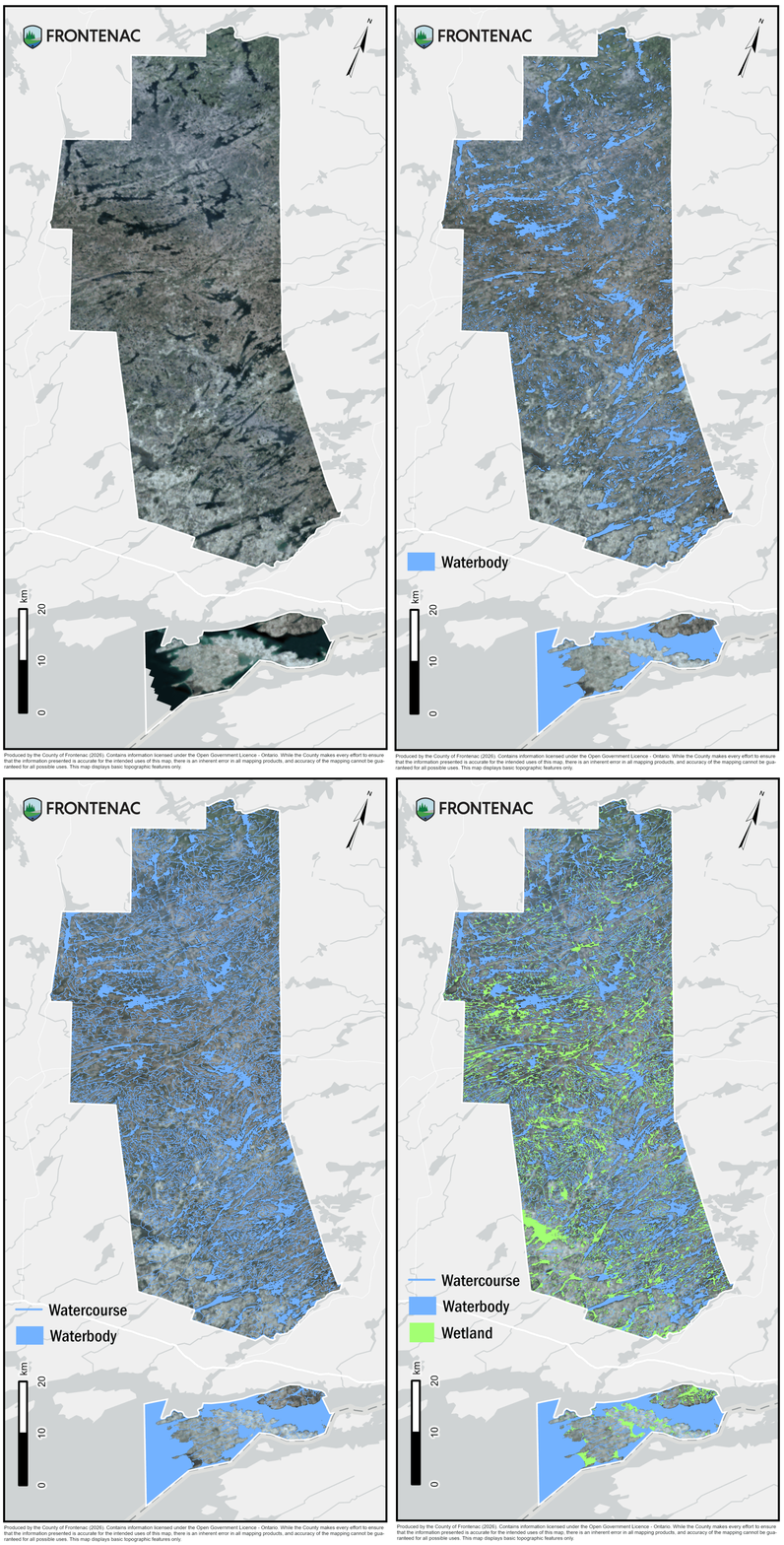
Natural heritage includes the land, water, air, plants, and animals that make Frontenac unique. This encompasses biodiversity such as rare species, significant landforms like wetlands and lakes, and the broader ecosystems that support life. With approximately 73% of the County remaining natural and undeveloped, and thousands of lakes and waterways, these systems play a critical role in filtering water, improving air quality, supporting food systems, and reducing flooding. The map below highlights the extent of water features within Frontenac’s natural heritage system. The three images show waterbodies (lakes), watercourses (rivers and streams), and wetlands. Protecting these features now helps maintain the environmental, social, and economic benefits they provide, while avoiding the long-term impacts of overdevelopment seen in other regions.
Rather than focusing on isolated features, the study looks at how entire ecosystems function together across the landscape. It will identify core natural areas, connections and corridors, and opportunities for restoration, while also helping guide where development can occur in a sustainable way. The results will inform updates to the County Official Plan, strengthen watershed-based planning, and support climate resilience by protecting systems that can adapt over time. Ultimately, this work will help balance growth and conservation, ensuring Frontenac’s natural heritage continues to thrive well into the future.
-
The Landscape Ecology Approach: The Kennebec Wetland Complex
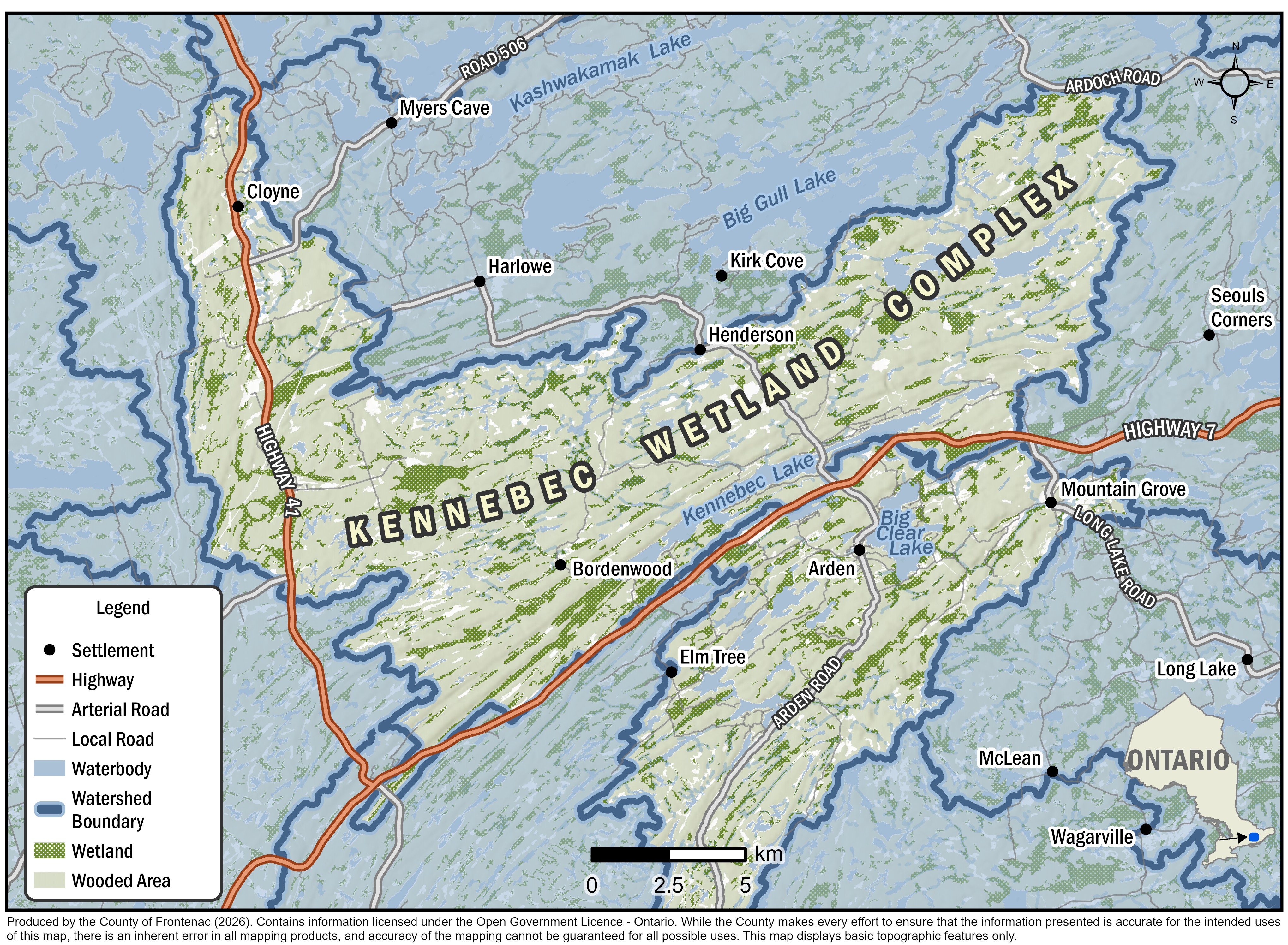
 The Kennebec Wetland Complex covers areas of North and Central Frontenac. It spans from Kennebec Lake in the south to Big Gull Lake in the north, and from Hungry and Mink Lakes in the east to Highway 41 in the west.
It includes three types of wetlands: fens, swamps, and marshes. These wetlands capture rainfall over a 2,500 hectare area. That is enough water to attenuate flooding peaks on the Salmon River up to four days after a major storm. Long-term water quality improvement by nutrient removal – the positive water purification effects of the complex – are so importantContinue reading
-
 County of Frontenac Official Plan (3.22 MB) (pdf)
-
Frontenac County Environmental Impact Study Guidelines 2024 (463 KB) (pdf)
-
County of Frontenac Natural Heritage Study Report 2012 (28 MB) (pdf)
-
Shoreline Planning in Frontenac County 2019 - SURP Queens University (22.9 MB) (pdf)
-
A Long-Term Planning Framework for Frontenac Countys Natural Heritage System 2021 - SURP Queens University (14.2 MB) (pdf)

-

Phone 613 548 9400 Email planning@frontenaccounty.ca -

Phone 613-548-9400, extension 351 Email planning@frontenaccounty.ca