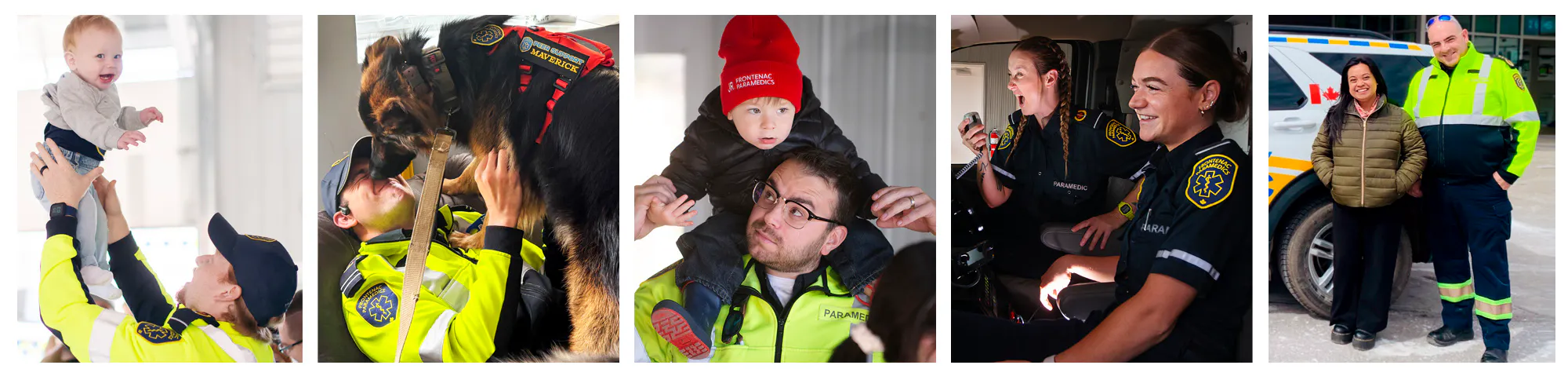
Paramedic and Family Wellness

Paramedics are exposed to Potentially Psychologically Traumatic Events (PPTEs) in their work and Post‑Traumatic Stress Injuries (PTSIs) are a significant occupational risk. Evidence and opinions vary but about 41 percent of Paramedics meet screening criteria for Post Traumatic Stress Disorder, and approximately nine percent report some suicidal ideation.

Supporting psychological health is a priority among Frontenac Paramedics. We are committed to maintaining a workplace where psychological injuries are understood, supported, and discussed without stigma. When a paramedic is struggling, it may not be realistic or fair to expect them to initiate support on their own. So, we provide pathways like these pages to early intervention, not only for paramedics, but for their families and loved ones, too. Click the buttons below to explore these pages.



Paramedics are exposed to Potentially Psychologically Traumatic Events (PPTEs) in their work and Post‑Traumatic Stress Injuries (PTSIs) are a significant occupational risk. Evidence and opinions vary but about 41 percent of Paramedics meet screening criteria for Post Traumatic Stress Disorder, and approximately nine percent report some suicidal ideation.

Supporting psychological health is a priority among Frontenac Paramedics. We are committed to maintaining a workplace where psychological injuries are understood, supported, and discussed without stigma. When a paramedic is struggling, it may not be realistic or fair to expect them to initiate support on their own. So, we provide pathways like these pages to early intervention, not only for paramedics, but for their families and loved ones, too. Click the buttons below to explore these pages.


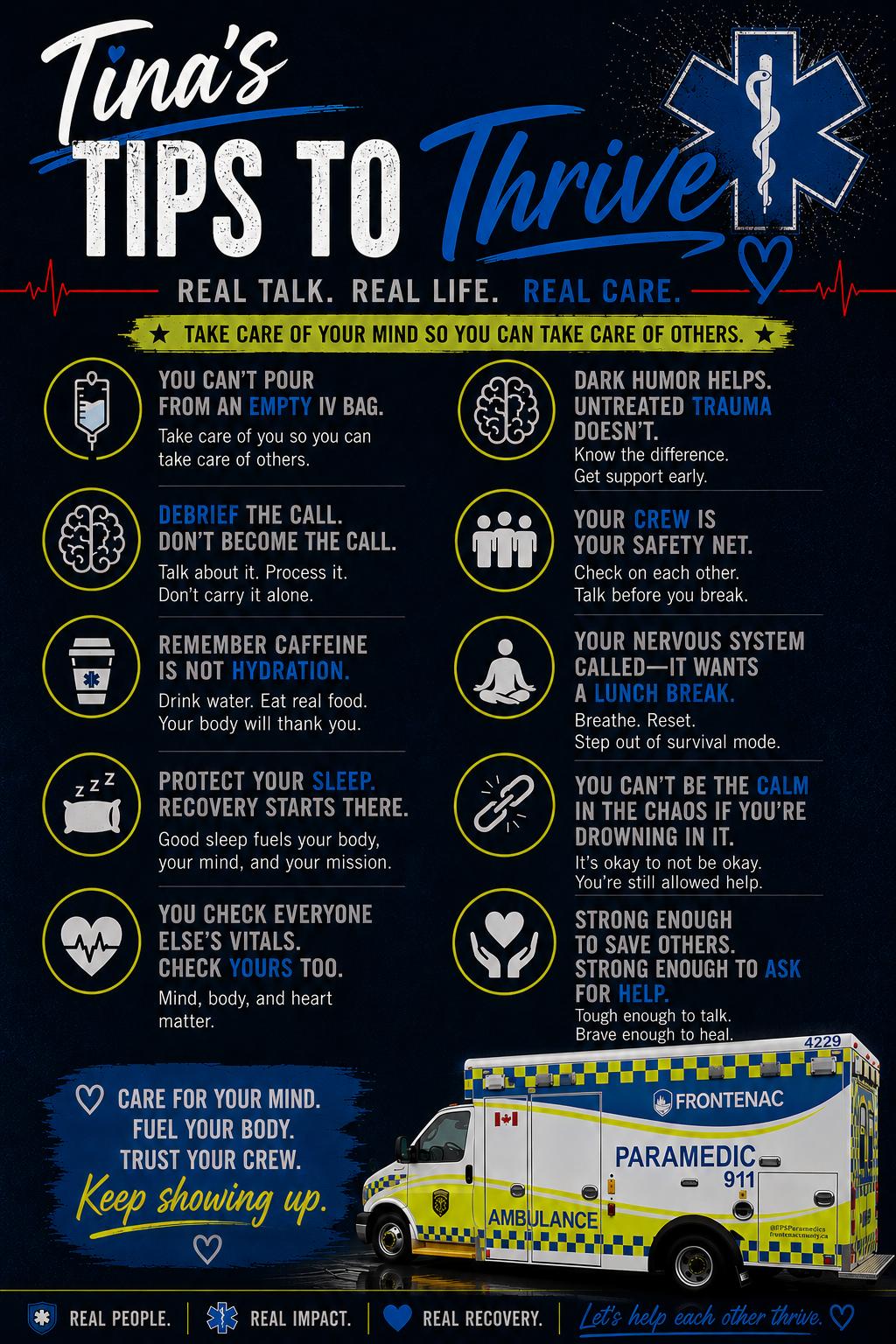
  • Tina's Tips to Thrive

  • Ontario First Responder Mental Health Conference 2026
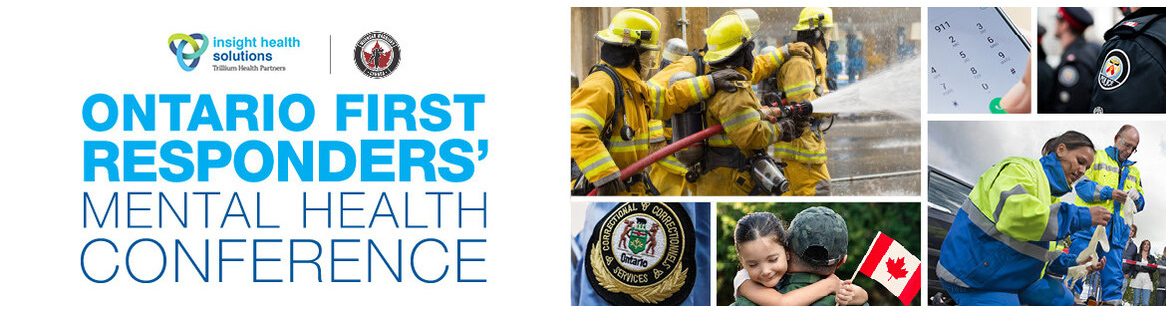

    Members of our Peer Support Team were able to attend the 4th Annual Ontario First Responder Mental Health Conference in April. This was another great opportunity for our peer supporters to connect with Public Safety Personnel from across Ontario. It was a valuable experience, bringing back knowledge, insights, and shared


    Members of our Peer Support Team were able to attend the 4th Annual Ontario First Responder Mental Health Conference in April. This was another great opportunity for our peer supporters to connect with Public Safety Personnel from across Ontario. It was a valuable experience, bringing back knowledge, insights, and shared resources to support the continued growth of the Frontenac Paramedic Peer Support Team.

  • Maverick, Frontenac Paramedics' Peer Support Dog
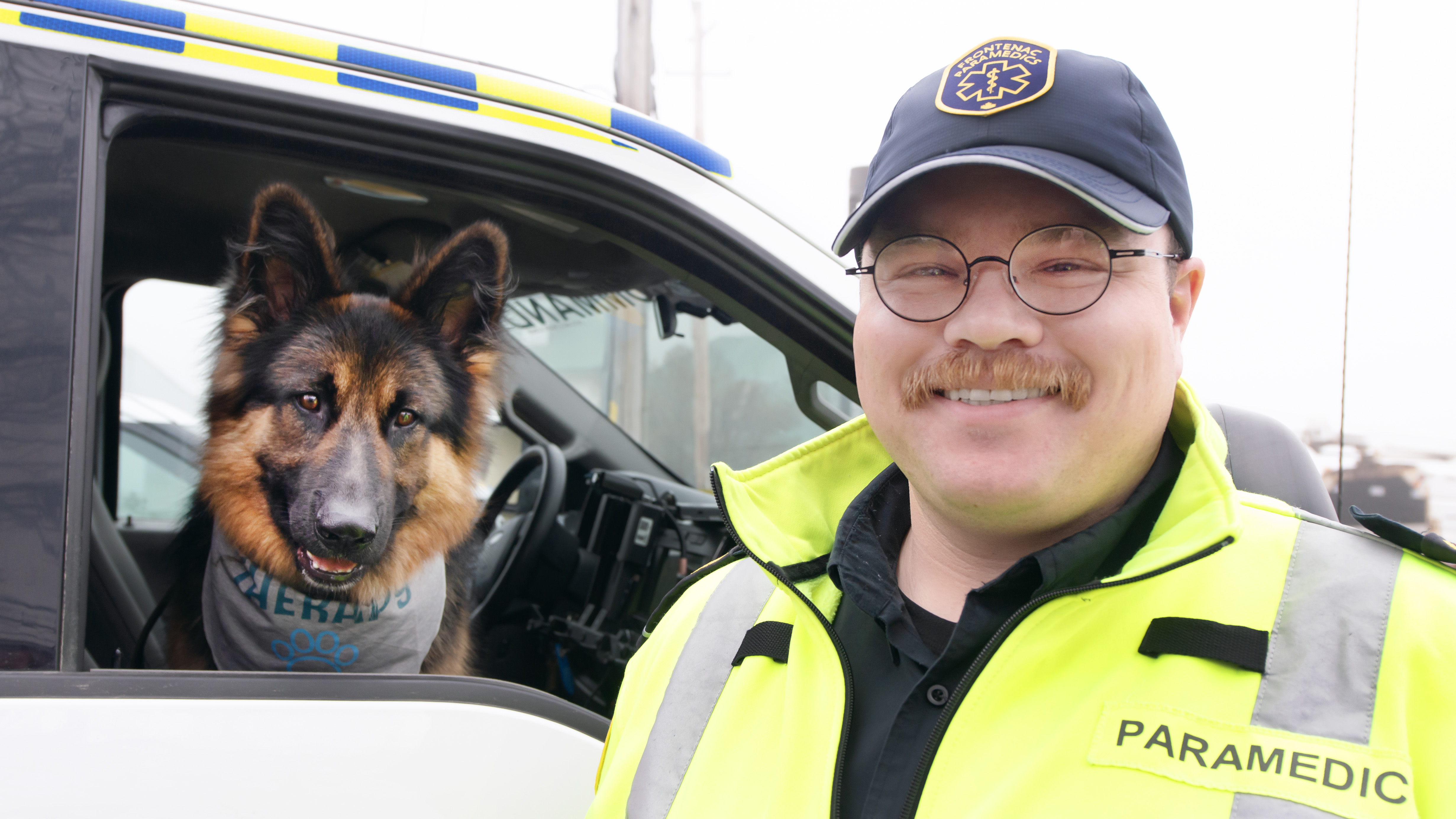

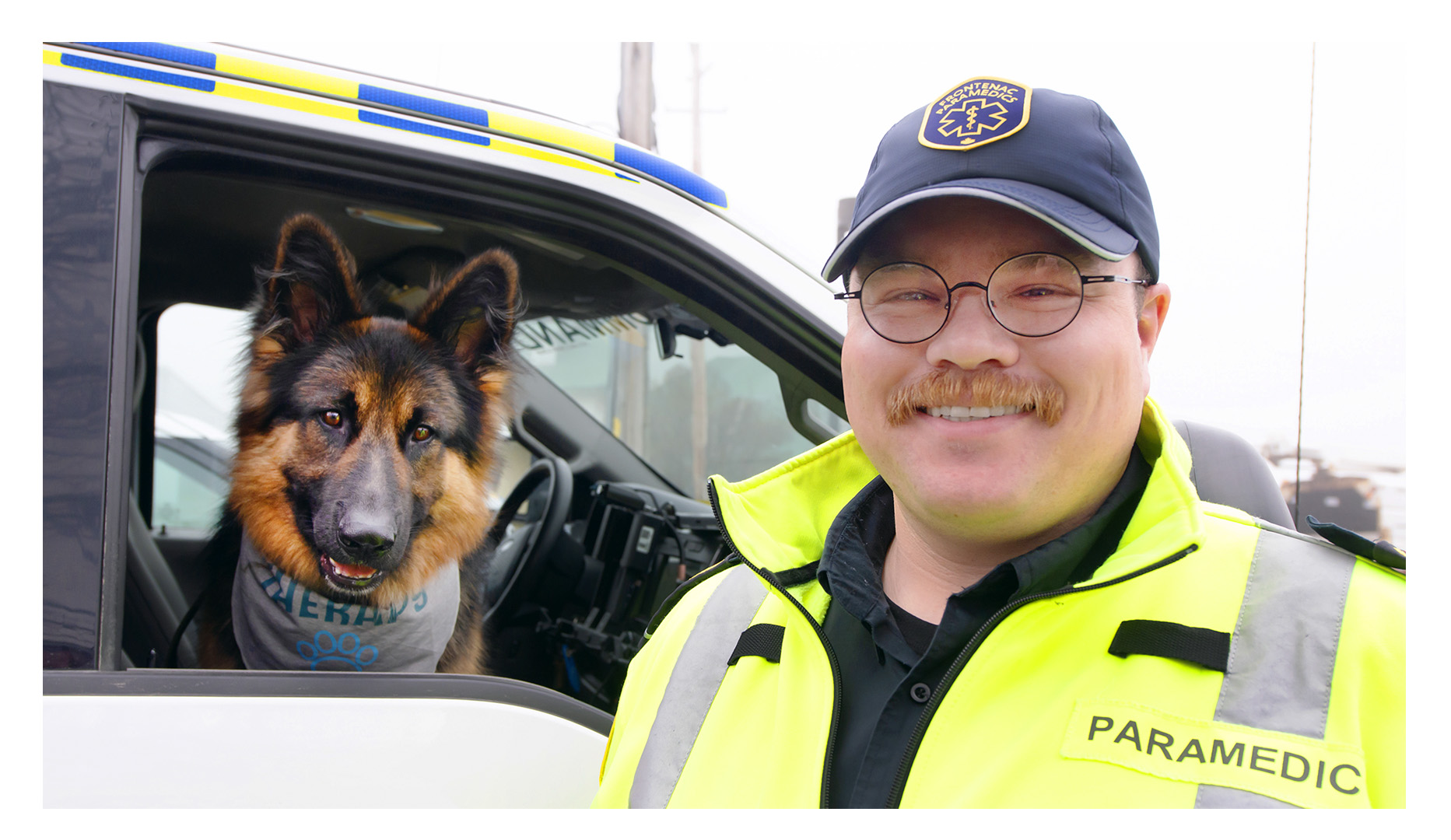
    Frontenac Paramedics is excited to launch a six‑month Peer Support Dog Pilot Program as part of our focus on staff wellness and Post Traumatic Stress Injury prevention. This pilot will explore whether visits from a trained peer support dog can help reduce stress and support morale within our service.

    The program features Maverick, alongside his handler, frontline paramedic Matt Stecher, who brought forward the idea for this initiative.

    Participation is always voluntary, and feedback from the pilot will help guide future decisions. We are proud to continue looking for new and meaningful ways to support our team.
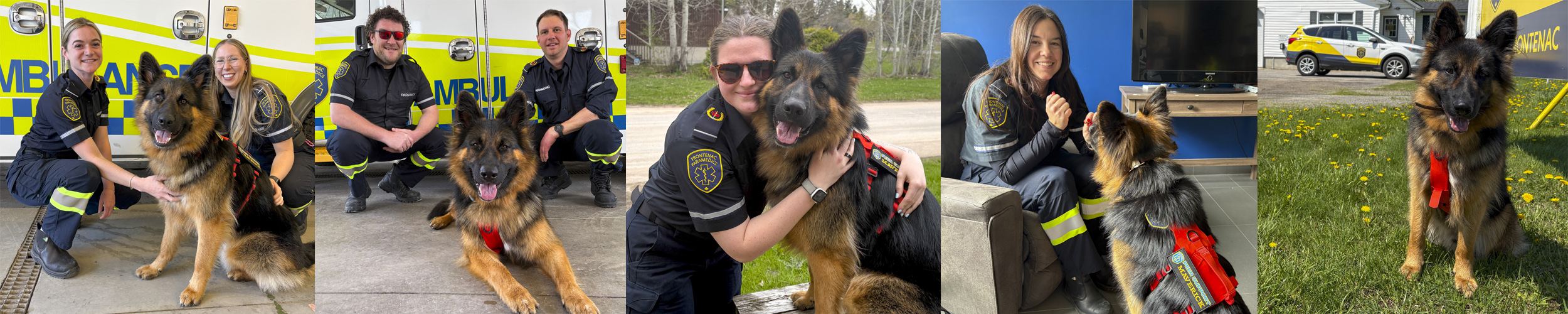


    Frontenac Paramedics is excited to launch a six‑month Peer Support Dog Pilot Program as part of our focus on staff wellness and Post Traumatic Stress Injury prevention. This pilot will explore whether visits from a trained peer support dog can help reduce stress and support morale within our service.

    The program features Maverick, alongside his handler, frontline paramedic Matt Stecher, who brought forward the idea for this initiative.

    Participation is always voluntary, and feedback from the pilot will help guide future decisions. We are proud to continue looking for new and meaningful ways to support our team.


  • Paramedic Supports

    Paramedics also have access to staff psychologists for short-term, confidential counselling, coping strategies, and early intervention.

    In addition, Superintendents receive specialized training to recognize signs of psychological stress and to offer trauma-informed support during and after challenging events, using evidence-based frameworks to guide consistent care.

    Employee Assistance Plan

    The County of Frontenac offers a free, confidential Employee Assistance Program through TELUS Health, available to all employees and their family.

    The EAP provides support across a wide range of personal, family, and work-related concerns. Clinical counselling is available in person, by phone, by video, or through online chat.

    Beyond counselling, the

    Paramedics also have access to staff psychologists for short-term, confidential counselling, coping strategies, and early intervention.

    In addition, Superintendents receive specialized training to recognize signs of psychological stress and to offer trauma-informed support during and after challenging events, using evidence-based frameworks to guide consistent care.

    Employee Assistance Plan

    The County of Frontenac offers a free, confidential Employee Assistance Program through TELUS Health, available to all employees and their family.

    The EAP provides support across a wide range of personal, family, and work-related concerns. Clinical counselling is available in person, by phone, by video, or through online chat.

    Beyond counselling, the EAP also offers professional consultations in areas like legal questions, financial planning, nutrition, health, career planning, and family support services. A library of digital self-help resources, and wellbeing tools is also available.

    All services are completely confidential, your employer will never know you've accessed support unless you choose to share that yourself.

    To access TELUS Health call 1-844-671-3327, access at one.telushealth.com, or using the TELUS Health One app. Login information has been emailed to all employees, if you're having trouble accessing please reach out to occupational health, your superintendent, or a member of peer support.


    Warrior Health

    Education, counselling, and training approaches to support recovery and resiliency from post-trauma injuries


    PSPNET Public Safety Personnel

    Internet-delivered cognitive behavioural therapy (ICBT) tailored for current and former public safety personnel (PSP), and their spouses or significant others


    Badge of Life Canada
    Information for first responders dealing with operational stress injuries


    Canadian Institute for Public Safety Research and Treatment (CIPSRT)
    A national organization that provides research, information, and resources to support the mental health of public safety personnel and their families


  • Crisis Supports


    Boots on the Ground
    24/7, anonymous, first-responder staffed helpline



    Warrior Health
    24/7 crisis support provided by Homewood Health

    Suicide Crisis Helpline
    24/7 suicide crisis helpline
    Call or text 988

    AMHS-KLFA Crisis Services
    24/7 crisis helpline, walk-in crisis supports, and mobile crisis response


    Boots on the Ground
    24/7, anonymous, first-responder staffed helpline


    Warrior Health
    24/7 crisis support provided by Homewood Health
    Suicide Crisis Helpline
    24/7 suicide crisis helpline
    Call or text 988

    AMHS-KLFA Crisis Services
    24/7 crisis helpline, walk-in crisis supports, and mobile crisis response


  • Resources for Families

    Supporting Those Who Support Us

    Families, chosen family, and loved ones play an essential and often difficult role in supporting paramedic health and well-being. We acknowledge that caring for someone who is regularly exposed to psychologically traumatic events can create added emotional stress and may impact the mental health and

    Supporting Those Who Support Us

    Families, chosen family, and loved ones play an essential and often difficult role in supporting paramedic health and well-being. We acknowledge that caring for someone who is regularly exposed to psychologically traumatic events can create added emotional stress and may impact the mental health and wellness of those who support them. Because wellness does not exist in isolation and extends beyond organizational boundaries, families are included in our broader support framework. For this reason, Frontenac Paramedics provides accessible family supports and resources for loved ones, ensuring our commitment to psychological health extends to those who play a critical role in supporting our Paramedics.

    Employee Assistance Plan

    The County of Frontenac offers a free, confidential Employee Assistance Program through TELUS Health, available to all employees and their family.

    The EAP provides support across a wide range of personal, family, and work-related concerns. Clinical counselling is available in person, by phone, by video, or through online chat.

    Beyond counselling, the EAP also offers professional consultations in areas like legal questions, financial planning, nutrition, health, career planning, and family support services. A library of digital self-help resources, and wellbeing tools is also available.

    All services are completely confidential, your employer will never know you've accessed support unless you choose to share that yourself.

    To access TELUS Health call 1-844-671-3327, access at one.telushealth.com, or using the TELUS Health One app. Login information has been emailed to all employees, if you're having trouble accessing please reach out to occupational health, your superintendent, or a member of peer support.

    Resources for Families


    Warrior Health
    A variety of resources for first responders and their families

    Wounded Warriors Spousal Resiliency Program
    Self-paced clinical program designed for spouses of Trauma Exposed Professionals


    PSPNET Families
    Information, strategies, and course designed to support families of Public Safety Personnel


    Garnet Families
    Evidence based resources for families of first responders
    Ontario Family Wellness Program
    Immediate assistance for families of first responders who have died in the line of duty or by suicide


  • When Things Feel Different

    Paramedics, family members, and close supports may notice small changes that can be early signs someone could benefit from support. These changes do not always mean something is wrong, but they can be signals that stress or repeated difficult calls are starting to have an impact.

    This is not a diagnosis checklist. These are simply common changes you might notice in yourself or someone you care about. What to look for:

    Body

    • Ongoing exhaustion that doesn’t improve with rest
    • Trouble falling asleep, staying asleep, or frequent waking
    • Feeling constantly “on edge” or unable to physically relax
    • Noticeable increase in restlessness

    Paramedics, family members, and close supports may notice small changes that can be early signs someone could benefit from support. These changes do not always mean something is wrong, but they can be signals that stress or repeated difficult calls are starting to have an impact.

    This is not a diagnosis checklist. These are simply common changes you might notice in yourself or someone you care about. What to look for:

    Body

    • Ongoing exhaustion that doesn’t improve with rest
    • Trouble falling asleep, staying asleep, or frequent waking
    • Feeling constantly “on edge” or unable to physically relax
    • Noticeable increase in restlessness or pacing
    • Using alcohol, cannabis, or other substances more to unwind

    Emotions

    • Irritability or anger that feels out of proportion
    • Feeling more anxious, tense, or easily overwhelmed
    • Emotional reactions that feel stronger or harder to control
    • Feeling numb, detached, or “checked out”
    • Loss of interest in things that normally matter

    Thoughts

    • Replaying difficult calls or scenes repeatedly
    • Trouble concentrating or making decisions
    • Racing thoughts or difficulty “shutting your brain off”
    • More negative or self-critical thinking than usual
    • Feeling like you’re carrying things you can’t talk about

    Relationships

    • Withdrawing from people or avoiding social interaction
    • Wanting to be alone much more than usual
    • Feeling disconnected even when with others
    • Increased conflict, impatience, or shorter fuse in conversations
    • Avoiding talking about work, or feeling stuck talking about it

    Are You Unsure How You're Feeling?

    You don’t need to wait for a crisis. If you notice changes that feel unusual for you or your loved one, or if something just feels off, it’s okay to reach out for early support.

    A quick, confidential tool to help track your mental health and recognize when support may help. Take the Warrior Health Self Assessment.

  • About Peer Support

    Frontenac Paramedics provides several supports to help paramedics manage the impact of difficult calls and ongoing stress. Our Peer Support Team offers confidential, non-clinical support from trained paramedics who understand the realities of the job and can help connect staff with additional resources.

    Feel free to contact the peer support co-chairs for more information or if you are having difficulty accessing Peer Connect.

    Peer Co-Chair: Alisha Scott

    Superintendant Co-Chair: Lindsay Esford

    Access the Peer Connect app.


    Frontenac Paramedics provides several supports to help paramedics manage the impact of difficult calls and ongoing stress. Our Peer Support Team offers confidential, non-clinical support from trained paramedics who understand the realities of the job and can help connect staff with additional resources.

    Feel free to contact the peer support co-chairs for more information or if you are having difficulty accessing Peer Connect.

    Peer Co-Chair: Alisha Scott

    Superintendant Co-Chair: Lindsay Esford

    Access the Peer Connect app.


Page last updated: 23 Jun 2026, 07:39 AM